
Gratuitous, condescending, obnoxious, and annoying, with a sprinkle of wonder.
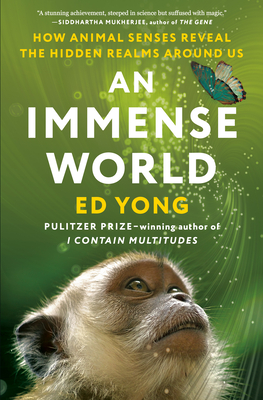
This book was such a disappointment. An Immense World is full of interesting, beautiful, and cool facts about the animal world, and I learned a lot. Animals seeing at different speeds and detecting colors we cannot even imagine. Echolocation. Electrolocation. Ground vibrations. Mapping the world through touch – all fascinating! But I cannot overlook the fact that this information was delivered by Ed Yong, an author who annoyed me and detracted from his own work more than any other I can think of in recent memory.
This is not an easy book to read. By its very nature, this book requires focus, and a lot of visualization of exotic wildlife and scientific phenomena that are fundamentally foreign to humans. This was a challenge that I signed up for, Yong did a good job relaying that information, and I was richly rewarded. What I did not sign up for was having to process all of that while navigating a minefield of Yong’s incessant snark, finger-wagging, virtue signaling, and name-dropping.
The book jacket claimed An Immense World was “funny.” The attempts at humor in this book are horrendously corny or insulting. Prime examples include labelling Game of Thrones as a “once-great show;” referencing viral TikToks, explicit rap lyrics, and the Eye of Sauron; ending the acknowledgments with an apology to any animals he forgot to mention and saying it’s a “good thing [they] can’t read;” and Yong’s favorite: jokes at the expense of the capitalism, technology and the human race itself, seemingly in return for some kind of absolution for the sin of existing.
This book is about 350 pages long (excluding the hefty notes, bibliography, and index sections) and yet I wanted so badly to take a pen and strike through whole paragraphs of gratuitous fluff and cringeworthy takes. Good luck getting through five pages without Yong name dropping some scientist whose direct quote to him he will just relay using the phrase ” [X] tells me” before moving on to the next one. I’m all for citing sources and giving credit where it is due, but a footnote or citation would suffice. These individual scientists are either forgettable as “characters” or were given so much focus that their stories and quirks distracted from the reason this book supposedly exists in the first place: the animals! And if you’re a historical researcher whose pioneering ideas were later proven wrong, it doesn’t matter that you were ahead of your time or were using the best tools at your disposal. Odds are Ed Yong will ridicule you. Without this padding and the “jokes” this book could have been cut down to under 300 pages, easily.
Despite its glaring flaws and my feelings about Yong’s tone and style, I was ready to give An Immense World 3 stars until I got to the final chapter of the book. This twenty-page swan song was Yong’s attempt to lecture readers on how humans have negatively affected the natural world and the sensescapes of various animals. The chapter was a disaster. Of course, Yong is absolutely correct about what humans have done and continue to do to our planet and to the other species we share it with. But as someone who has written academic papers about conservation, I was baffled by how arrogant and half-assed Yong’s advocacy was. Throughout this book, Yong gave me a sense that in his mind there are two types of humans: (1) scientists and people like him and (2) stupid people. This was on full display here. No human act or achievement is off limits, from the global shipping system to the lights that commemorate the 9/11 attacks. I could not believe that this Pulitzer-winning journalist at The Atlantic gave maybe a page to suggesting how humans could better co-exist with other species. Yong’s suggestions were basically to turn off lights and regulate industries. He went as far as to frame the COVID lockdowns as the greatest blessing our planet has been given in the modern age. There was zero grappling with the complexities of balancing human needs and the realities of modern life with the important moral obligations we have to the natural world. Yong is so quick to tell people to turn off their lights and be quiet, but does that mean we should drive without lights at night or have people endanger themselves by walking in the dark? If there is a lack of economic incentives for industries to make technological shifts, can you, Mr. Yong, please share with us what you think those incentives should be and how our governments should go about legislating it? This is rookie stuff, and if Yong did not want to discuss it with the care and sophistication it deserves, then don’t bring it up at all. To use Yong’s brand of humor, this chapter was as productive as the infamous viral video of celebrities singing Imagine during the early days of the COVID-19 pandemic.
As far as I can tell from this book, Yong is the kind of “elite” figure that turns well-meaning curious people off from learning about new things or trying to get involved. I cannot fault any reader who picks up this book and gives up because they feel talked down to, preached at, or infuriated at the hypocrisy of an author who tells them to switch off their lights and that modern technology and systems are horrible, but then can’t restrain himself from chronicling all the jet-setting he did to assemble this distillation of other people’s research. For someone who worked so hard to ensure his book avoided being ableist, sexist, or disrespectful of animals and their rights in any way, Ed Yong’s glaring blindspot is elitism.
Yong researched many senses to write this book. A deep dive into tone-deafness was clearly missing.
 The Once and Future Lit