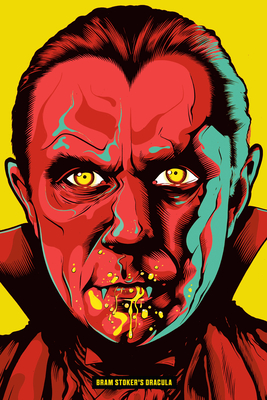
There’s a reason Dracula and “vampire” have been synonymous the world over, for over a century. The Count, and Bram Stoker’s tale are truly deserving of their icon status. Of course, there are the images of a lightening-struck Castle Dracula looming over a Transylvanian cliff, and there’s a lot of blood, bats, crucifixes, garlic, stakes, etc. but the vivid imagery in this book goes so much further. My mental images of the Demeter rolling into port, Lucy walking through the graveyard at night, Renfield’s disgusting meals, the “baptism of blood,” Dracula scaling down the castle walls and assuming different forms, and the sisters appearing in the middle of the snowstorm are all among the most vivid I can recall having when reading classic literature.
I opened this novel knowing very little of what to expect in terms of plot and characters. Dracula aside, Jonathan and Mina Harker and Abraham Van Helsing were standouts. The way the story is written as an epistolary novel told through letters, diary entries, and memoranda is really cool and adds an extra layer of suspense and intimacy in an already-rich narrative. Somehow, I didn’t know how much of Dracula is actually set in London, not Transylvania, and while I enjoyed the surprise, some parts in the mid-section of the novel were a bit slower than I would have liked (a little too much characters talking in rooms). The overall concept though is brilliant, and I loved how what started out as a pure gothic horror with a crushing sense of powerlessness and fear turned into an action-packed and suspenseful race against time.
There are two ways in which Dracula’s age shows. One is that this novel does little to subvert the most standard Victorian gender tropes. On the downside, this often leads to the female characters being sidelined. But on the other, Dracula’s apparent targeting of women adds so many compelling themes to the novel and I’m sure there are endless analyses out there of the ways in which Dracula explores the intersection between horror and sensuality. The other effect of the novel’s age is a product of its resounding success: a lot of the original mystery and defective work the characters are doing is now completely ingrained in the modern reader’s mind before they even pick up this book. It would be a completely different experience reading Dracula and not having the cultural knowledge of vampires that we do today, and I imagine the shocking realization of what Stoker conjured up in this novel added to the thrill back with Dracula was first published in the 1890s.
That said, for the most part, Dracula is still a page turner and it is a whole lot of fun. I strongly recommend Dracula to anyone looking for an accessible classic, a gateway to horror, or just the perfect Halloween season read.
 The Once and Future Lit