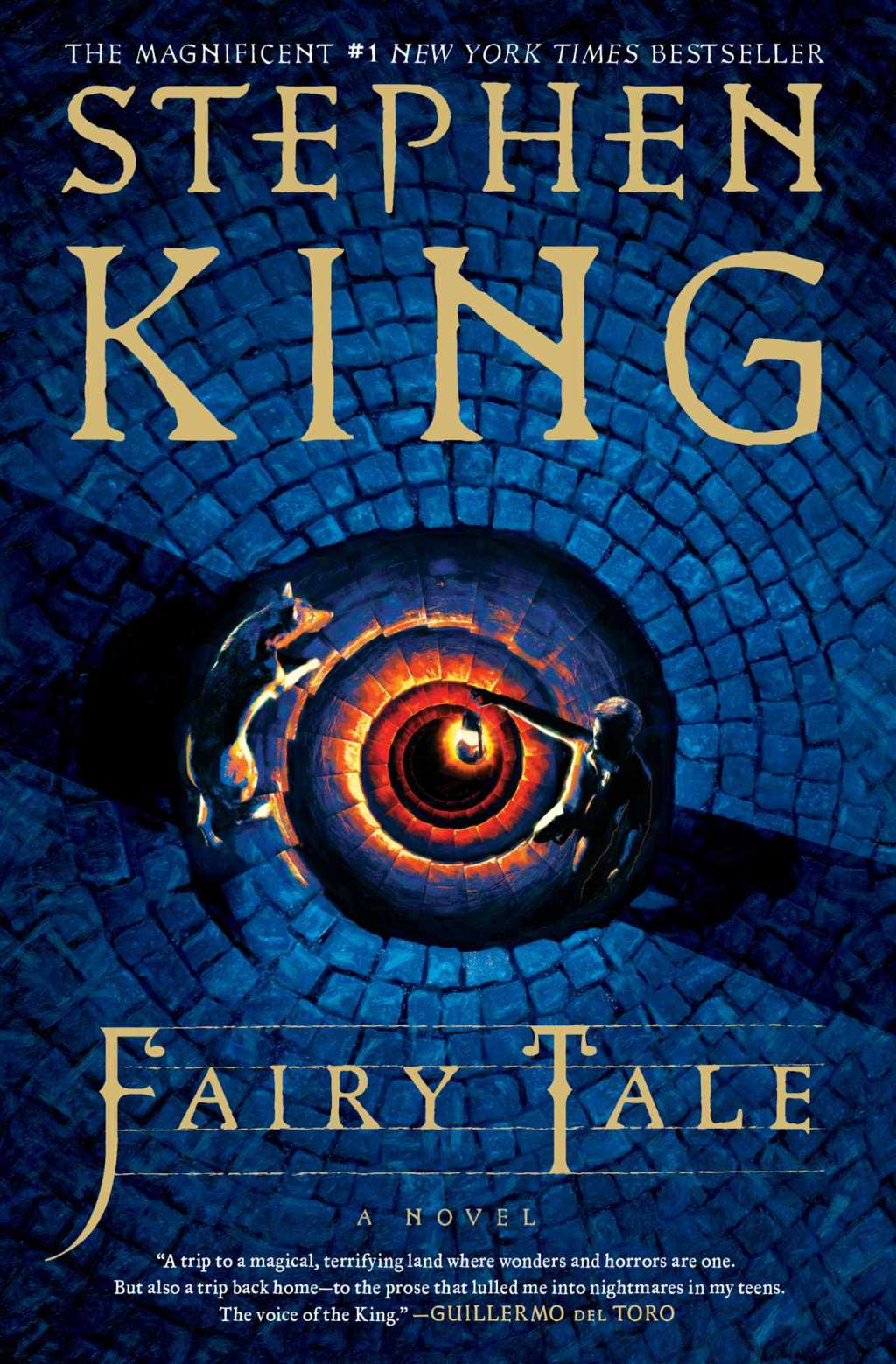
Fairy Tale is a very good book. But it had a right to be even better, even great. And it certainly started out pretty much flawless. In the most unexpected twist of all, the most compelling part of Stephen King’s take on fantasy was the first ~25% of the novel, which is just the story of a teenage boy who is grappling with grief, his dad’s alcoholism, the everyday challenges and responsibilities of high school, and his incredibly endearing relationships with the neighborhood recluse and his dog. There was so much that I loved about this first part of the novel, particularly the pacing, the relationships, and the sense of mystery. This is only my second Stephen King novel, and a lot of what was set up here really convinced me that the man is worthy of his legendary status as a novelist.
Unfortunately, the actual fantasy in Fairy Tale is less magical. To be fair, King creates a lot of vivid and dark imagery, but ultimately, the fictional land of Empis just felt very small and, dare I say, gray. There is very little fun to be had in Empis, and King’s ambitious goal of including his takes on multiple fairy tale characters, a post-apocalyptic landscape, a dystopian gladiatorial arena, Lovecraftian monstrosities, royal family drama, a chosen one archetype, and time travel meant that Fairy Tale felt widely uneven. Clocking in at 600 pages, I don’t necessarily think this book needed to be longer, I just think King should have tried to do less. There were too many side characters, underdeveloped sub-plots and mysteries, and I would not have missed the entire Deep Maleen/Fair One detour at all if it had been omitted in favor of more time with Radar, Leah, Woody, Claudia, or even the big bad villains. I was also disappointed that there was really no connection at all between Empis and our world, especially because King made it seem like there would be with the Rumpelstiltskin theme from the very beginning. Without getting into specific spoiler territory, I will also just say that King made some choices here that were shockingly amateurish or disappointing, and that I would not scrutinize nearly as much if they weren’t being written by one of the most prolific and successful novelists of all time. The bite. The sex scene. If you’ve read it, you know what I’m talking about. And all the pop culture references? Too much.
And yet, for all its many flaws, I really did enjoy this book. The first part is probably a 10/10, and even at its most ridiculous, it’s hard not to have fun and root for Charlie and Radar, even if exploring a fantasy world where everything of interest is dead or gray isn’t quite the fairy tale we were promised. Stories about a boy and his dog is hard to mess up, as are stories with a protagonist who is incredibly easy to love. This is the kind of book I would have put on a pedestal when I was Charlie’s age, and King claims he wrote this as a fun pandemic project to make him happy. I suppose at this point in his career, King has earned the right to have a bit of fun. Fairy Tale is Stephen King’s take on a young adult portal fantasy novel, and it does that well. Just don’t take it much more seriously or have higher expectations than that and you’ll mostly have a grand old time.
Spoiler Criticisms:
– The moment where Charlie is captured and detained in Deep Maleen for several chapters is where this book took a big dive in quality. I can’t believe King devoted several chapters to sitting and talking in a prison cell with a crew of one-note characters, and then at the end crammed defeating the big bad and the big-big-bad into a single chapter. A huge misfire on pacing. And an even bigger misfire choosing to remove Radar from the story.
– It’s so disappointing that the one major injury/defeat that Charlie suffers comes at the hands (teeth?) of a very minor evil minion, after the main villains have already been defeated. This felt pointless.
– A lot of the narrative tension King builds up in the early parts of the novel deflates relatively early in the novel, or if you’re expecting certain unresolved issues to re-emerge, they ultimately never do. Imagine if King had instead chosen to leave Radar’s fate unresolved until the novel’s climax. Why did the mysterious over-world characters like the nosy neighbor and Chris Polly just fade into the background and ultimately serve little narrative purpose? Why all the emphasis on characterizing Mr. Bowditch’s actions as Empis as cowardly? How did Charlie’s dad really respond to his absence and was he tempted to cope with it by using alcohol again? Was Elden sorry for the choices he had made? These were all ideas I wish were explored way more deeply.
 The Once and Future Lit