
For many years, I have considered diving back into reading more classic works of literature. And yet, this was a goal I delayed time and time again, until now. I suppose after being tormented by Jane Eyre and Wuthering Heights in school, and being bombarded by a university course on Dostoevsky (which I admittedly had hardly the schedule nor patience to truly commit to at the time) to the point of boredom, it makes sense that I avoided picking up a hefty literary classic of my own accord for so many years. It is often said that classics find their readers when they are meant to. This was true for me for Dickens (with the allure of his Victorian England coated with the perfect mix of sentimentality and darkness) more than any other author. But I often feared I would pick up one of his novels when I was not ready, and thereby become jaded and dismissive of his works.
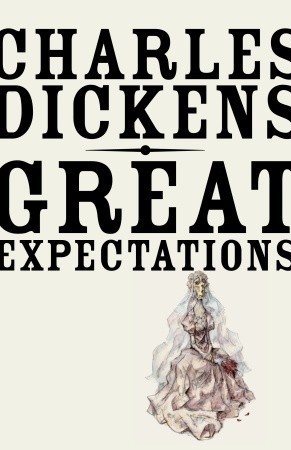
With that preamble, I am beyond happy to report that my first Dickens novel, Great Expectations was a sublime reading experience, and I will staunchly defend this novel occupying its place in the pantheon of the literary canon. Despite the author and the title being near-ubiquitous, I somehow knew very little of Great Expectations’ plot, characters, and themes before picking up the book. I was immediately won over by Dickens’ style (for who else would begin a novel with a child visiting his parents’ graves on Christmas Day?), and devoured this book within a week.
On the characters, I have very little to offer but pure praise. It seems a substantial contingent of readers dislike Pip, but I found Pip’s arc incredibly endearing and relatable, and that the values and lessons he learns through experience, ambition, and even failure are nothing less than Dickens novelizing age-old parables resembling Biblical tale of the prodigal son, or the myth of Icarus. Miss Havisham was a perfect foil, and the spectral embodiment of what happens to so many people in this world who are so unable to let go of their unmet expectations and disappointments that it drives them to mental, physical, and spiritual decay. And Joe. Joe is now one of my all-time favorite characters in literature. Everything about the way Dickens wrote this character, from his humility, to his simple tastes, to his signature “We’re the best of friends, aren’t we Pip?” does so much to endear readers to this man who ultimately has more to teach our protagonist than just about anyone can. The evolution of his relationship with Pip goes from heartwarming to heartbreaking and right back around again, so much so that his final letter to Pip near the end of the book almost moved me to tears.
The plot itself also expertly crafted and executed, and I was so thrilled to be turning pages vigorously, savoring each plot twist and revelation. Similarly, Dickens is a master of setting and tone. As discussed, Great Espectations is deeply touching and sad. It is also hilarious, scary, romantic, suspenseful, and light-hearted without ever feeling jarring or sloppy. In his lifetime, Dickens’ novels were often read aloud, and he even personally enjoyed reading to a live audience. I can only imagine the satisfaction he got from hearing an audience laugh at his referring to an unpleasant character’s death as their having given upon on their “bad habit of living;” or watching their wide eyes and tears at Joe and Pip’s friendship; or gasping at the haunting imagery of Miss Havisham’s accident, disfigured stalkers, and convicts prowling misty marshes.
There is so much more I could inevitably say about Great Expectations, but I am sure much of it has been said a thousand times before, and even more I have yet to even uncover after a single reading. I will certainly revisit this work (and Dickens) in the future, and I look forward to delving deeper into this truly great text.
QUOTES
“That was a memorable day to me, for it made great changes in me. But it is the same with any life. Imagine one selected day struck out of it, and think how different its course would have been. Pause you who read this, and think for a moment of the long chain of iron or gold, of thorns or flowers, that would never have bound you, but for the formation of the first link on one memorable day.”
“So, throughout life, our worst weaknesses and meannesses are usually committed for the sake of the people whom we most despise.”
“Suffering has been stronger than all other teaching, and has taught me to understand what your heart used to be. I have been bent and broken, but – I hope – into a better shape.”
“In shutting out the light of day, she had shut out infinitely more; that, in seclusion, she had secluded herself from a thousand natural and healing influences; that, her mind, brooding solitary, had grown diseased, as all minds do and must and will that reverse the appointed order of their Maker, I knew equally well. And could I look upon her without compassion, seeing her punishment in the ruin she was, in her profound unfitness for this earth on which she was placed, in the vanity of sorrow which had become a master mania, like the vanity of penitence, the vanity of remorse, the vanity of unworthiness, and other monstrous vanities that have been curses in this world?”
 The Once and Future Lit