
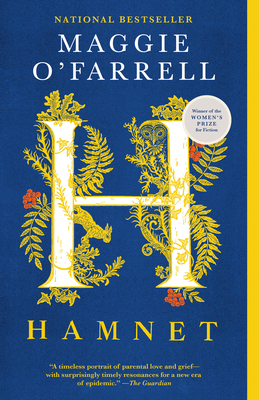
There is a lot in Maggie O’Farrell’s Hamnet that I really like, and yet, I find it a difficult book to say too much about. The premise itself is incredibly compelling: this is the story of William Shakespeare’s wife, and how her identity, marriage, and entire family are impacted by the death of her beloved son, Hamnet. Peeling back the layers of a story you thought you knew, or uncovering a piece of history that has been lurking in the shadows of major event or narrative is one of the most compelling aspects of historical fiction of a genre, and that is what O’Farrell is endeavoring to do here. Through Agnes, readers get a look into the personal life of the most influential writer of all time and the world that made the man, and O’Farrell’s wonderful prose does a great job making her characters incredibly relatable and empathetic.
The problems I had with Hamnet ultimately tended to be with the book slipping into way too many tropes, and I could not help comparing it to similar reads such as Eleanor Shearer’s River Sing Me Home and Hilary Mantel’s Wolf Hall trilogy that handled similar subject matter and themes in a much more sophisticated and emotionally impactful way. Just to give a few examples, I thought the novel would have been better off excluding the vague references to witchcraft and the supernatural. In historical fiction I prefer when an author either goes all in and incorporates the supernatural into the text, or as Hilary Mantel masterfully does, uses ghosts and fate as psychological symbols or forces of nature. Instead, O’Farrell’s portrayal of Agnes as some kind of unexplained witch just seemed very typical of the “healer woman at the edge of town” trope that has saturated fiction for so long and to no real end. Additionally, I do not understand why O’Farrell felt the need to act as though Shakespeare’s identity was some big secret throughout the entire novel. The trope of sidelining a popular male character or figure as a way to elevate a female counterpart is at best distracting and at worst dishonest. Finally, I wish O’Farrell would have done a bit more to show the reader how much Agnes loved her children and who her children really were as people. We are told constantly that Hamnet is such a special boy, but throughout the entire novel, he feels very distant before becoming absent. At the same time, Agnes’s attachment to him and his sisters is primarily framed through the context of her spiritualism and her premonitions about how she expects her life to pan out. Therefore, when Hamnet dies, her grief comes across more as though she is upset that her visions were wrong than she is actually grieving a beloved son. Again, I would look to Eleanor Shearer’s River Ring Me Home as an example of maternal love and grief done right.
It may seem that I am picking this book apart and that I disliked it, but I want to be clear that I really enjoyed reading this book and that it was hard to put down. There is just so much in here that is interesting that I just wish it had been explored more fully. The supporting characters are wonderful and I would have liked to get to know them better. The spiritual themes are interesting, so I would have loved to seen that explored more. There is a lot left to the imagination and to interpretation here, and I suppose, in a way, that is appropriate for a Shakespeare-adjacent tale.
 The Once and Future Lit