
I have spent the autumn reading novels that fit the Halloween theme (horror classics, Stephen King), and only shifted to reading Lincoln in the Bardo because it was the host’s selection for our quarterly book club. Well, as it turns out, the best ghost story turned out to be the one I did not see coming. Walking through a cemetery at night will never be the same, and that’s coming from someone with a lifelong fascination with graveyards.
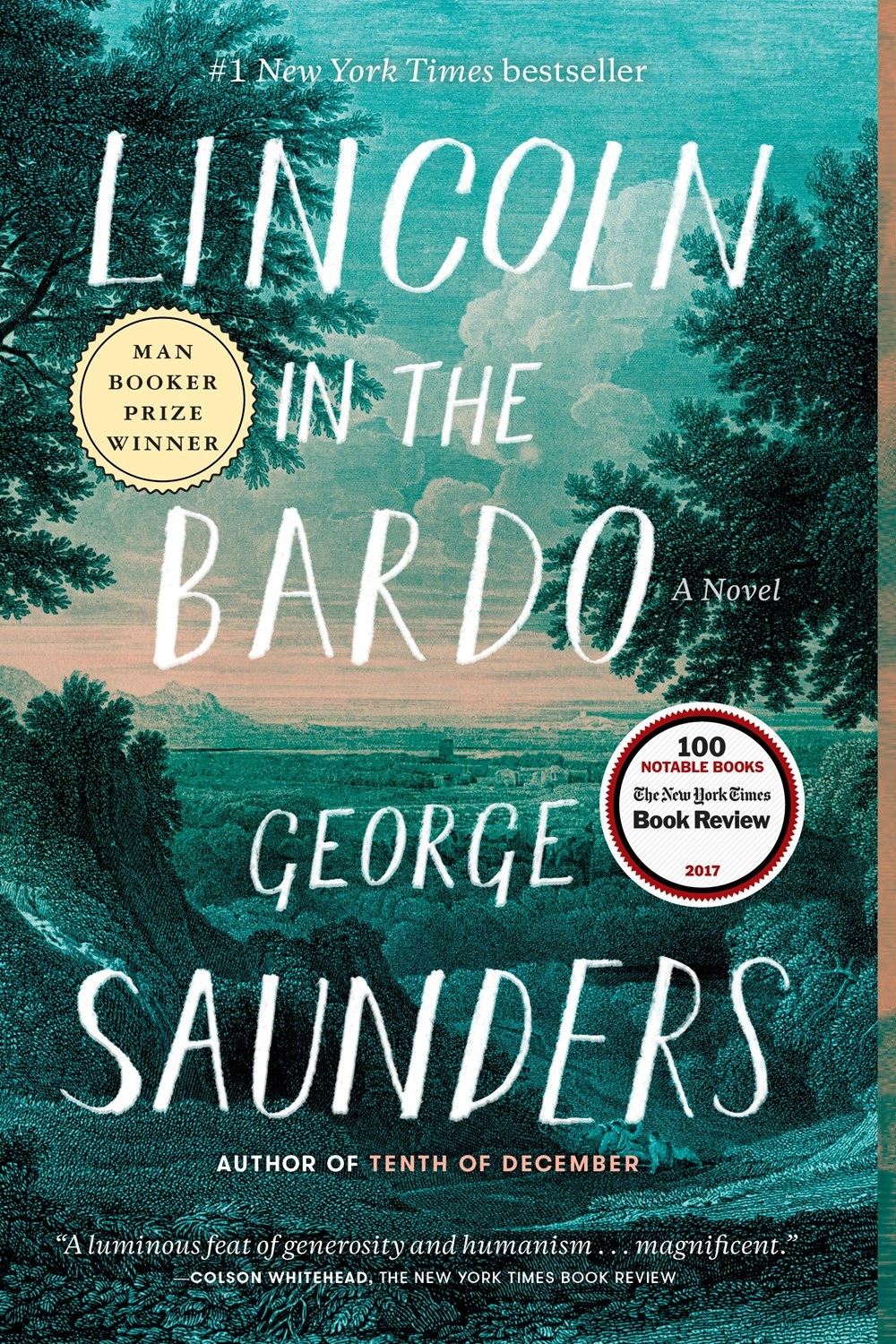
Lincoln in the Bardo is not at all what I expected based on the synopsis, the cover, and even its many accolades. More than a work of historical fiction, or even a novel in the traditional sense, George Saunders’ novel is a wild and unmoored exploration of the human experience. Specifically, how does each of us navigate life’s fragility, love’s impermanence, and death’s inevitability?
Structured more like a play than a novel, Lincoln in the Bardo reminded me of works like Waiting for Godot and Rosencrantz and Guildenstern are Dead, in that much of the text is a back-and-forth between a small cast of characters who aren’t so much doing anything, as they are observing something or waiting for something. From the seed of the sad and morbid image of Abraham Lincoln cradling his son’s corpse in the grave at night, Saunders created a whole world, the Bardo, limbo, purgatory, in which the souls of those who rest in denial of their own deaths on those grounds linger and exist day after day, until little is left of who they truly were but for the simple narratives they tell of themselves.
The ghosts are fascinating and tragic in their own ways: the man who dies just before he and his wife truly begin to love one another; the spurned gay man so overwhelmed by heartbreak and marginalization that he takes his own life; the reverend who cannot overcome his fear of God’s judgement; the tormented slaves; the bitter parents; the bachelors unwilling to admit that for them, true love will always be a “never;” and of course, little Willie Lincoln himself.
This is one of those reading experiences that may take a while to click, and may actually never click for some readers. And that’s understandable. Structurally, the bulk of the text is written in abrupt back-and-forth narration mostly between Bevins, Vollman, and Reverend Thomas, with each other ghost periodically swooping in to tell their own stories. The remainder is a collection of historical notes from primary sources, detailing the events immediately preceding and following Willie Lincoln’s death. I’m on the fence on whether this worked for me or not. On one hand, it works by making the land of the living so much more grounded in facts and reality when juxtaposed with the sheer chaos, absurdity, and emotional intensity of the ghosts’ narratives. It also reminds readers that the monolithic and hagiographical of Lincoln’s legacy in the present day was not the case during his lifetime. On the other hand, many of the historical sources lack any real literary flair at all, and serve to distance the reader from Saunders’ prose. On the whole, though, this didn’t detract much from the overall reading experience. Nor did the eyebrow-raising toilet humor and copious descriptions of genitalia and sexual debauchery. It’s part of the human experience, after all.
The best ghost stories are the ones that show ghosts not as cartoonish, demonic, or unambiguously scary, but rather as still-fully human, just with some emotional anchor that prevents them from letting go and moving on. Lincoln in the Bardo is among the best portrayals of this, and the way that each ghost’s soul manifests a different angle of the human experience and the full range of emotion is masterful. Fear. Lust. Silliness. Denial. Detachment. Trauma. Bigotry. Pride. Hate. Rage. Friendship. So much is on display during just one night in the Oak Hill Cemetery, except for the most important things of all: love, happiness, and peace. These are only available to those who are living, or who are willing to take the leap of faith and pass into the beyond. And the fact that it is a child who unlocks that realization in this tale is truly beautiful.
Is this really a novel about Abraham Lincoln in any significant way? Not really. But it is so much more than that. This is an invitation to think about what we love, what we want, and what we are afraid of, and why. This is a reminder that we lose ourselves bit by bit when we cling too tightly to the past and our internalized narratives, and fail move on or to engage with life itself.
This is a really special reading experience, and I would encourage anyone to at least give it a try.
QUOTES:
“I had thought this helpful. It is not. I need not look upon it again. When I need to look upon Willie, I will do so in my heart. As is proper. There where he is yet intact and whole. If I could confer with him, I know he would approve; would tell me it is right that I should go, and come back no more. He was such a noble spirit. His heart loved goodness most.
So good. Dear little chap. Always knew the right thing to do. And would urge me to do it. I will do it now. Though it is hard. All gifts are temporary. I unwillingly surrender this one. And thank you for it. God. Or world. Whoever it was gave it to me, I humbly thank you, and pray that I did right by him, and may, as I go ahead, continue to do right by him.
Love, love, I know what you are.”
“His mind was freshly inclined toward sorrow; toward the fact that the world was full of sorrow; that everyone labored under some burden of sorrow; that all were suffering; that whatever way one took in this world, one must try to remember that all were suffering (none content; all wronged, neglected, overlooked, misunderstood), and therefore one must do what one could to lighten the load of those with whom one came into contact; that his current state of sorrow was not uniquely his, not at all, but, rather, its like had been felt, would yet be felt, by scores of others, in all times, in every time, and must not be prolonged or exaggerated, because, in this state, he could be of no help to anyone and, given that his position in the world situated him to be either of great help or great harm, it would not do to stay low, if he could help it.”
“Strange, isn’t it? To have dedicated one’s life to a certain venture, neglecting other aspects of one’s life, only to have that venture, in the end, amount to nothing at all, the products of one’s labors ultimately forgotten?”
“Only then (nearly out the door, so to speak) did I realize how unspeakably beautiful all of this was, how precisely engineered for our pleasure, and saw that I was on the brink of squandering a wondrous gift, the gift of being allowed, every day, to wander this vast sensual paradise, this grand marketplace lovingly stocked with every sublime thing.”
“What I mean to say is, we had been considerable. Had been loved. Not lonely, not lost, not freakish, but wise, each in his or her own way. Our departures caused pain. Those who had loved us sat upon their beds, heads in hand; lowered their faces to tabletops, making animal noises. We had been loved, I say, and remembering us, even many years later, people would smile, briefly gladdened at the memory.”
 The Once and Future Lit