
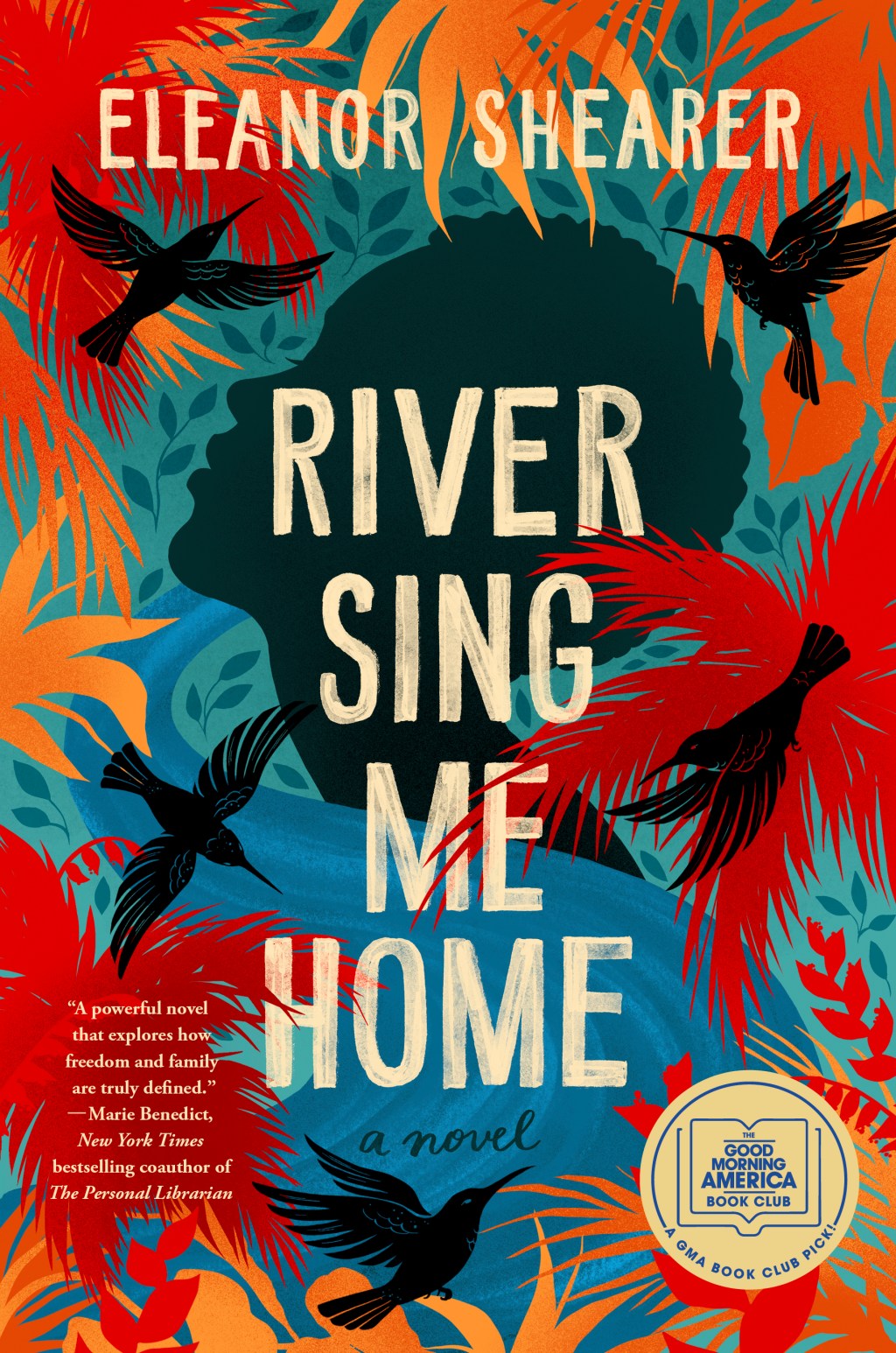
This is a beautiful book and a masterful achievement in writing historical fiction. I first discovered River Sing Me Home on a list of new 2023 releases and I was instantly intrigued by a historical novel partly set in my native Trinidad getting so much positive buzz. I am so happy to say that Eleanor Shearer’s debut novel did not disappoint and got so much right about the richness of Caribbean culture that exists even today.
In addition to being such a wonderful representation of the Caribbean, Shearer’s novel also illustrates the painful and disturbing toll that slavery and colonization took on its victims. Never before have I seen a writer so powerfully depict trauma, fear, and loss in so many forms. In just 300 pages, River Sing Me Home really challenges readers to empathize and truly feel the pain of losing ones freedom, one’s children, one’s parents, one’s siblings, one’s culture, one’s body, one’s memories, and even one’s hope. It is a heart-wrenching experience but it is absolutely worth every page.
Despite its heavy material, this novel is by no means bleak, and that tonal balance is something Shearer accomplished through how truly wonderful her character work is. Rachel is one of the most compelling protagonists I have ever had the pleasure of getting to know, and the supporting cast of characters is so dynamic, diverse, and memorable. Each character brings a level of thematic depth and richness to the story and through them Rachel (and us as readers) learn so much about history and humanity. So many of the supporting characters Rachel meets during her travels are incredibly compelling and I would happily read more about their lives if given the opportunity.
Beyond her impressive fictionalization of history, strong character work, and vivid world-building, Shearer also did a wonderful job as a story teller. At its core, River Sing Me Home has a very simple narrative structure; it is essentially a fetch quest in which our protagonist goes on a journey to find each of her five children, one by one. This simple structure, combined with the tight page count and seamless introduction of new settings and characters makes River Sing Me Home a fast-paced and easily-digestible read. However, if this novel has a significant flaw, it is that its leanness sometimes pushes the reader to suspend disbelief and accept plot conveniences that go just a little too far. This issue is most noticeable at the very beginning and very end of the novel.
Overall, I am so happy I picked up this book, and I would strongly recommend it to readers looking for a historical novel, a lesson in Caribbean history and the immediate aftermath of emancipation, a dynamic female protagonist, or a powerful tale of hope, family, and resilience.
 The Once and Future Lit