Scary? Not really. Uncomfortable? Deeply.
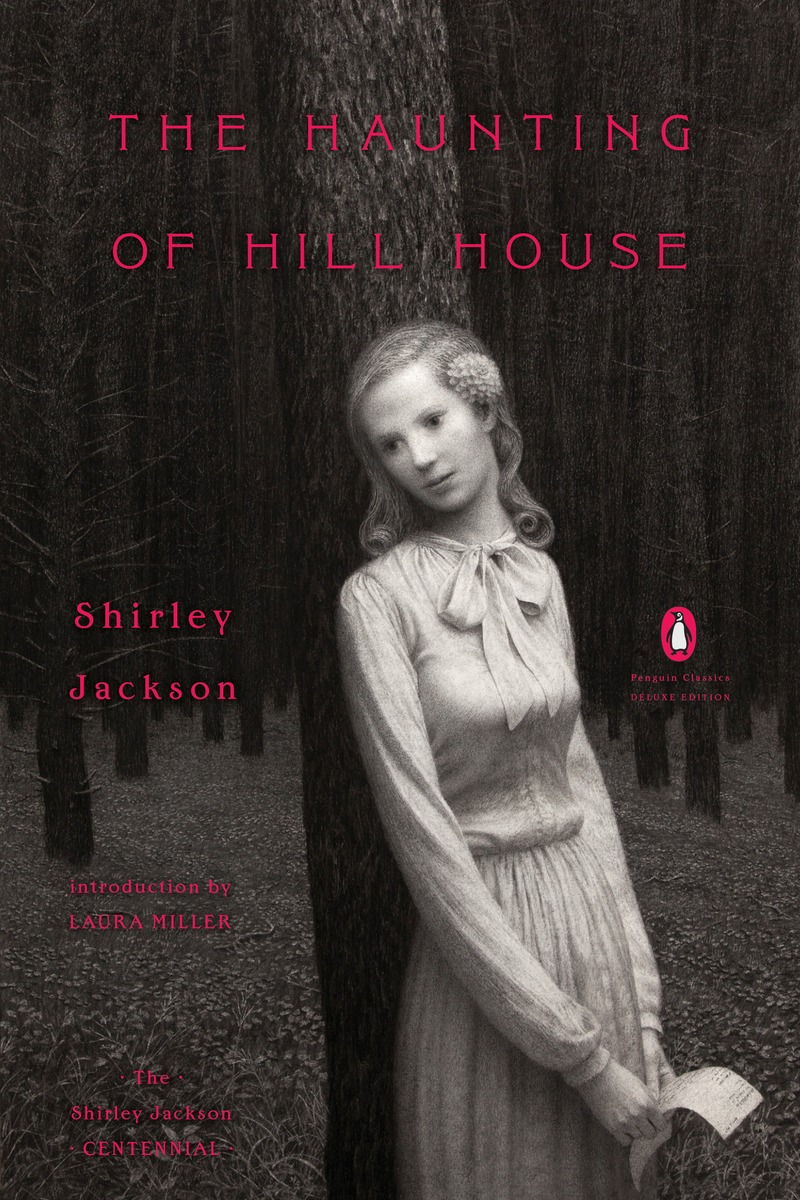
If you pick up The Haunting of Hill House hoping for a jump-scare horror and actual spectral manifestations, you will probably be under-whelmed. But That does not mean Shirley Jackson’s novel isn’t a horror in the most psychological, human way. In short, Eleanor’s story is what every real-world introvert, social outcast, or black sheep fears above all else: loneliness; rejection; and a complete lack of purpose and belonging.
Jackson’s narrative is fairly minimal. Instead, most of the emphasis is on character work, with a particular emphasis on Eleanor and Hill House itself. It may be a well-worn trope at this point to say that a haunted house is a character in and of itself, but it really cannot be understated the extent to which Jackson’s 1959 novel laid that foundation so that the haunted houses of countless films and books since could succeed. Hill House is absolutely unpleasant. From the time we first lay eyes on it we are told that it is “sick.” It is cold, it is loveless, and its architecture and setting are senseless, claustrophobic, and unsettling to common sensibilities. While the extent to which the house is literally haunted is never explained, there is no question that it has an immense impact on the characters and the reader alike, and the urge to understand and explore is what keeps the pages turning. As for the other characters, they are all interesting, but under-developed since the story is told strictly from Eleanor’s perspective. Jackson sprinkles tidbits of who these characters are and why they are sympathetic or interesting, but largely leaves the rest, including their motivations, to the imagination. How does Luke really feel about never having had a mother? Why does Mrs. Dudley refuse to deviate from her housekeeping routine? We will never know.
The lack of explanation continues all the way through the novel’s very abrupt conclusion. On the plus side, this builds suspense and intrigue. However, while unresolved mysteries are compelling parts of horror as a genre, there is just a little bit too much left unresolved here, and it makes The Haunting of Hill House feel somewhat incomplete and unsatisfying.
In conclusion, other than one scene (the first night of noises in the hallway), I did not find this book particularly scary in the traditional sense. However, The Haunting of Hill House is definitely disturbing, suspenseful, and pretty sad. This is less a story of a haunted house, and more a story of a haunted soul riddled with deep fear and insecurity. It is the kind of book you can’t put down out of curiosity, and that you keep thinking about long after you’ve finished the final page. Not because you can’t sleep at night, but because we all have some Hill House within us.
The Haunting of Hill House, Shirley Jackson
 The Once and Future Lit