A great tale. One that truly matters.
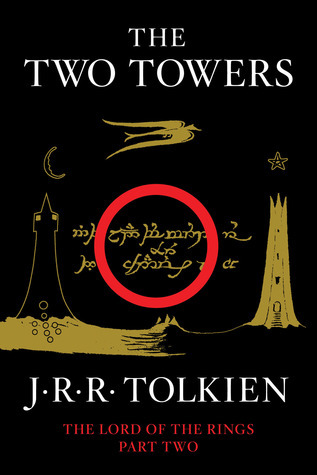
The Two Towers was such a wonderful and well-paced read. I remember in the past being skeptical of Tolkien’s decision to include the entirety of the Isengard/Rohan plot (Aragorn, Gandalf, Gimli, Legolas, Merry, Pippin) in Book 3, and the Ringbearer’s quest (Frodo, Sam, Gollum) in Book 4. However, I had no issues with this decision during this re-read. The narrative constantly has forward momentum with the introduction of new characters and locations, and every main character is well-written and interesting. The Two Towers is a more grounded volume than its predecessor, as we spend far more time in the World of Men. But that does not make this portion of The Lord of the Rings any less colorful.
As usual, Tolkien does an exquisite job describing nature in such a way that every river, hill, and tree is imbued with the magic of Middle Earth. Gimli’s awe of the glittering caves and the descriptions of Ithilien are prime examples. Of course, in The Two Towers, nature is truly brought to life in the form of the Ents. Treebeard’s appearances in this book were among the most beautiful and touching. I genuinely felt emotional when Treebeard told Merry and Pippin the sad tale of the loss of the Entwives, and there is a true tragedy in the Ents accepting that they will slowly fade from the world. Every war brings a loss that can never be undone, and Tolkien beautifully illustrates that theme through the Ents in the War of the Ring. I was so moved by the song of the Ents and the Entwives that I included it in my list of favorite quotes (below).
Other standout character moments in The Two Towers include the deepening friendship between Gimli and Legolas, Faramir’s introduction, Sam’s unwavering loyalty to Frodo, and the turmoil of Gollum.
On that note, I do want to give Gollum his own special discussion in this review. Everything about this character is an example of masterful character writing. I cannot think of any other character in literature who is able to evoke so manny different reactions from a reader. Tolkien’s descriptions of Gollum’s posture, his eye color, his use of “I” and “we” pronouns, and so many other cues give the reader hints into this conflicted character’s shifting thoughts, intentions, and feelings at any given time, and reading Gollum dialogue is so entertaining that it feels like watching a play. I actually laughed out loud on several occasions (the discussion of taters chief among them) and felt sorry for poor Sméagol at other times.
I want to avoid discussing Peter Jackson’s film adaptations as much as possible when reviewing these books, but I think it is worth noting that for film fans, the biggest potential “disappointment” in Tolkien’s text will be his writing of action, specifically the battle at Helm’s Deep. This event looks very much as it did in the film, but first time readers should not expect extended battle sequences in this book. The most gripping action, in my opinion, was actually the drowning of Isengard, as it is once again a testament to Tolkien’s ability to weave the theme of nature’s power and magic into the narrative.
QUOTES:
“Do we walk in legend or on the green earth in the daylight?”
“A man may do both,” said Aragorn, ” For not we but those who come after will make the legends of our time.”
“There are some things that it is better to begin than to refuse, even though the end may be dark.”
“You knew you were behaving wrongly and foolishly; and you told yourself so, though you did not listen… But if I had spoken sooner, it would not have lessened your desire, or made it easier to resist. On the contrary! No, the burned hand teaches best. After that advice about fire goes to the heart.”
“It was Sam’s first view of a battle of Men against Men, and he did not like it much. He was glad that he could not see the dead face. He wondered what the man’s name was and where he came from; and if he really was evil or heart, or what lies and threats had led him on the long march from his home; and if he would not really rather have stayed there in peace -“
“War must be, while we defend our lives against a destroyer who would devour all; but I do not love the bright sword for its sharpness, nor the arrow for its swiftness, nor the warrior for his glory. I only love that which they defend.”
“Despair had not left him, but the weakness had passed. He even smiled grimly, feeling now as clearly as a moment before he had felt the opposite, that what he had to do, he had to do, if he could, and that whether […] anyone else ever knew about it was beside the purpose.”
“We shouldn’t be here at all, if we’d known more about it before we started. But I suppose it’s often that way. The brave things in the old tales and songs, Mr. Frodo: adventures, as I used to call them. I used to think that they were things the wonderful folk of the stories went out and looked for, because they wanted them, because they were exciting and life was a bit dull, a kind of a sport, as you might say. But that’s not the way of it with the tales that really mattered, or the ones that stay in the mind. Folk seem to have been just landed in them, usually — their paths were laid that way, as you put it. But I expect they had lots of chances, like us, of turning back, only they didn’t. And if they had, we shouldn’t know, because they’d have been forgotten. We hear about those as just went on — and not all to a good end, mind you; at least not to what folk inside a story and not outside it call a good end. You know, coming home, and finding things all right, though not quite the same — like old Mr Bilbo. But those aren’t always the best tales to hear, though they may be the best tales to get landed in! I wonder what sort of a tale we’ve fallen into?”
“Don’t the great tales never end?”
“No they never end as tales,” said Frodo. “But the people in them come and go when their part’s ended.”
The Ent and the Entwife:
Ent:
When spring unfolds the beechen-leaf and sap is in the bough,
When light is on the wild-wood stream, and wind is on the brow,
When stride is long, and breath is deep, and keen the mountain air,
Come back to me! Come back to me, and say my land is fair!Entwife:
When Spring is come to garth and field, and corn is in the blade,
When blossom like a shining snow is on the orchard laid,
When sun and shower upon the earth with fragrance fill the air,
I’ll linger here, and will not come, because my land is fair!Ent:
When Summer lies upon the world, and in a noon of gold
Beneath the roof of sleeping leaves the dreams of trees unfold,
When woodland halls are green and cool, and wind is in the West,
Come back to me! Come back to me, and say my land is best!Entwife:
When Summer warms the hanging fruit and burns the berry brown;
When straw is gold, and ear is white, and harvest comes to town;
When honey spills, and apple swells, though wind be in the West,
I’ll linger here beneath the Sun, because my land is best!Ent:
When Winter comes, the winter wild that hill and wood shall slay;
When trees shall fall and starless night devour the sunless day;
When wind is in the deadly East, then in the bitter rain
I’ll look for thee, and call to thee; I’ll come to thee again!Entwife:
When Winter comes, and singing ends; when darkness falls at last;
When broken is the barren bough, and light and labour past;
I’ll look for thee, and wait for thee, until we meet again:
Together we will take the road beneath the bitter rain!Both:
Together we will take the road that leads into the West,
And far away will find a land where both our hearts may rest.
 The Once and Future Lit