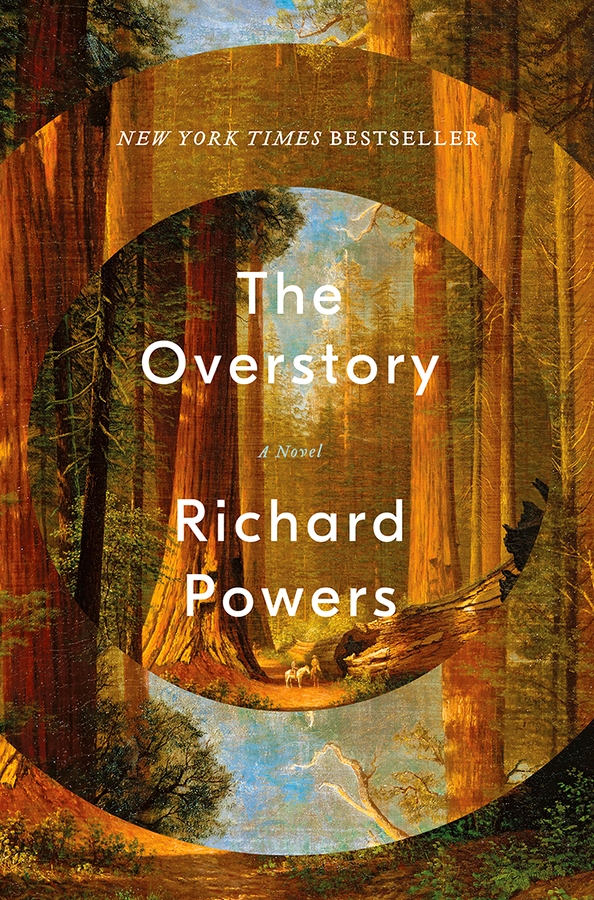
I wanted to love this book. And I truly did love the first part, Roots. Each chapter in the novel’s opening section did a great job establishing each character and setting up high emotional stakes. By the time each of those roots had been planted I was very invested in how they would grow, wrap around one another, and evolve into satisfying character arcs. I had high hopes for the characters, particularly Nick, Mimi, and Neelay, but my imagined character arcs for each ended up being much more dramatic and satisfying that anything The Overstory offered beyond page 152.
As many readers and reviewers have noted, the back half of this book is jarringly different from what came before and it was at this point that all the novel’s structural issues overwhelmed any emotional investment I had in its outcome. From the beginning, I found Powers’ choice to write the entire thing in the present tense distracting, but it really got tiresome after a while. The constant changing of chapter lengths and organization in each section of the book created an inconsistent pace, and as the novel went on the ratio of compelling character moments to tree-related trivia and righteous preaching flipped completely. Some people may find it profound that in their darkest moments Powers’ characters take time to think about how every year gets hotter than the last, or how the law is wrong to operate on the timeline of humans rather than trees, or that the words “tree” and “truth” come from the same linguistic root, but this was just not for me.
Surely, there is a reason this novel won the Pulitzer Prize and I do not disparage anyone else for loving it, but maybe I am just missing the forest for the trees.
 The Once and Future Lit