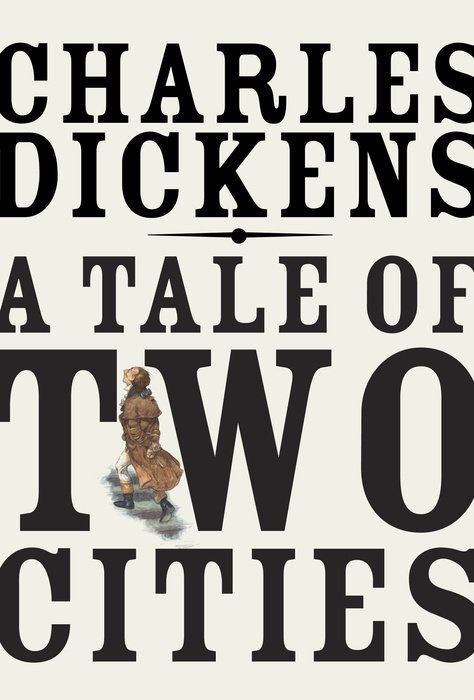
This truly was both the best of times and the worst of times. I had “great expectations” for this book, given the incredible experience I had reading Great Expectations last year, and perhaps that was a bit unfair to A Tale of Two Cities. I had a sense before picking up this novel that it is somewhat of a black sheep in Dickens’ body of work, in that the style and subject matter are very different from many of his other works. As a fan of historical fiction, I did not think I would mind, but it ended up really taking a while for me to appreciate A Tale of Two Cities for what it is. In Great Expectations, I was blown away by the top-tier character work and the very close relationships between characters. This is largely absent in A Tale of Two Cities (with the notable exception of Sydney Carton, particularly in Book Three). Instead, the characters feel quite distant and flat, and much more emphasis is placed on plot.
The other big shift here is Dickens’ prose. The truly iconic opening and closing lines of this novel need no description. However, at times, it can be really difficult to keep track of what is happening. Dickens often refers to characters by nicknames, pseudonyms, or vague titles (the prisoner; the doctor’s daughter, etc.) and writes lengthy metaphorical musings that I definitely glazed over often enough that I felt confused, and needed to re-read whole sections to piece together what ultimately was a very basic plot.
Book Three (the last hundred-or-so pages) ultimately redeemed A Tale of Two Cities for me. The pacing got so much better, the writing so much clearer, and the emotional and thematic pay-off at the end was masterful. Sydney Carton’s sacrifice is an all-time great moment in literature, and Dickens’ nuanced representation of revolutionary politics is a poignant and timeless warning that it is easy for good political and social causes to be co-opted by opportunism, radicalism, excess, and self-destruction.
Overall, A Tale of Two Cities is by no means a bad book. I think it is certainly uneven and I the odd-one-out label definitely makes sense if I can assume that Dickens’ other novels share much more DNA with Great Expectations. The first half is a bit tedious at times, but the ending truly leaves things on a very high note.
 The Once and Future Lit