
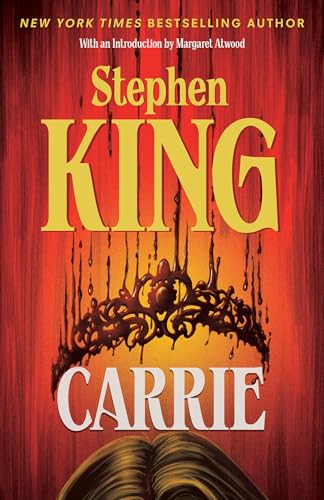
This was the first book in years that I managed to read in a single day. It was just that propulsive and gripping. Carrie is the third Stephen King novel I’ve read, and the first that is properly a horror, and as with my prior King outings, I was once again amazed by King’s incredible talent for crafting story and character.
It is truly impressive that Carrie was King’s first ever published novel, and it makes complete sense that it was the first entry in the career of one of the world’s most talented, prolific, and successful storytellers. Carrie White is a fantastic character, and while the archetype of the bullied high schooler who gets pushed to breaking point may seem very familiar today, the fact that this book was published five decades ago shows King’s ability to shape entire genres. The abusive relationship between Carrie and her mother is as horrifying and compelling as any of the other more gruesome terrors in these pages. Seeing how Carrie is starved of human connection, shamed into living a small existence inside the confines of her mother’s religious zealotry, and literally forced into an ugly and unhealthy existence is truly heartbreaking. King does what so many modern books and films fail to do: present a believable, sympathetic villain/anti hero without glorifying or redeeming their wrongdoing.
Many of the supporting characters are great as well. Margaret White (Carrie’s Momma) is an absolutely despicable and deranged woman, while Tommy, Susan, and Ms. Desjardin are tragic figures – good people who ultimately fail to help Carrie and show her sufficient kindness before it’s too late.
The horror elements of Carrie are quite disturbing. This isn’t a ghost or monster story, but rather a gory psychotic breakdown. Carrie has much more in common with a school shooter than a demon, and that makes this cautionary tale far more frightening. The role that blood plays in this novel (and the astounding quantity of it) is very unsettling, and King’s sensory descriptions of violent death are truly uncensored.
The main criticisms I have of Carrie mostly relate to when the novel’s scope reaches beyond what its tight page count can handle. The extent of the devastation Carrie unleashes on the town of Chamberlain in the final act felt a bit excessive and ultimately detracted from the tragedy of what transpired at the prom itself. I would like to imagine that a more practiced King would have been a bit less heavy-handed in this regard. I also did not care much for the attempt to grapple with what it would mean for the world if there were other people with Carrie’s abilities out there. I understood what King was going for, but there just wasn’t enough space to tackle this bigger issue properly.
Overall, Carrie was a great read. It was fantastic having a gripping story that I could devour in one day. I am very excited to continue diving deeper into King’s catalogue.
 The Once and Future Lit