
“There are real problems facing many boys and men, which need to be addressed, and if progressives ignore them others will be sure to pick them up… Our politics are now so poisoned that it has become almost impossible for people on the Left to even discuss the problems of boys and men, let alone devise solutions. This is a missed opportunity. We need the strongest advocates for gender equality, many of whom are on the liberal side of the spectrum, to take a more balanced view. Otherwise, the danger is that boys and men will look elsewhere.”
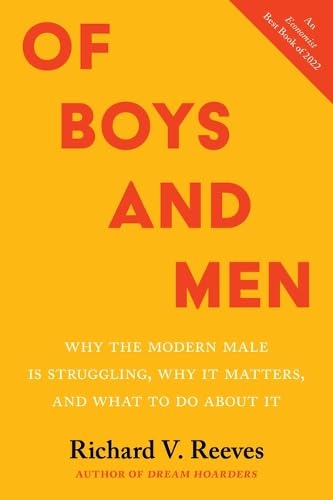
What would it take to make this book mandatory reading for every influential voice in Democratic politics and progressive media/activism? After the denialism of the last few years and the crusade against “toxic masculinity” contributing to the results of the 2024 election, I hope the American political Left will finally start to take the ideas in Reeves’ book seriously. Some of the statistics in Of Boys and Men are startling, including that men are on average three times more likely to commit suicide or suffer other “deaths of despair,” that the gender gap in college enrollments has more than flipped since the 1970s, and that men’s wages have at best stagnated since the late 1970s.
In Of Boys and Men, Reeves unloads four main buckets of material: 1) the problems afflicting modern men in schools, the work place, and in family and social life; 2) the biological realities and predispositions that serve as the building blocks of masculinity; 3) the inadequacies of current political and public policy responses to issues that affect boys and men; and 4) policy recommendations on how to best solve these problems. Reeves does an excellent job with the first three of these buckets, and I found each of these sections incredibly compelling and interesting. Reeves’ chapters on “what to do” to solve these problems were not quite as strong, in my opinion. While I certainly lack the policy background to criticize his proposals on the merits, the heavy reliance placed on allocating specific budget items toward programs to improve men’s outcomes in school, work, and as fathers felt a bit underdeveloped and idealistic. I struggle to see a world (particularly in the United States of America in 2024) where programs giving fathers six months of “use or lose” paid leave per child, or investing billions of dollars into increasing men’s involvement in health, education, administration, and literacy jobs would ever happen. I appreciate the utopian sentiment, but I think some more feasible starting points would have been better placed.
While the specific policy solutions to the problems facing modern boys and men certainly require more research, debate, and participation by men from outside elite institutions, the phenomena Reeves has highlighted in this book are incredibly important and are hopefully serving as the foundation for an open and honest conversation with solutions in culture, as well as politics and public policy.
 The Once and Future Lit