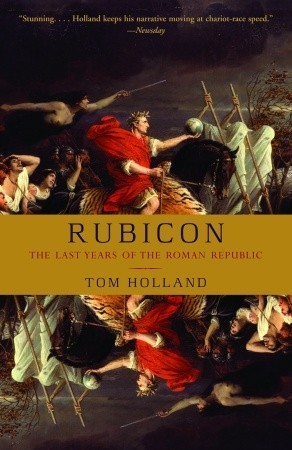
Rubicon was a bit of a disappointment for me. In his capacity as co-host of the The Rest is History, Tom Holland is one of my favorite history in this explainers and presenters, and has an undeniable talent for infusing history with thrills, scandal, intrigue, suspense, and comedy. But I am starting to doubt whether he carries that voice over into his actual historical writing. In both Dominion, and now Rubicon, I have found Holland’s writing style a bit exhausting and difficult for seemingly no reason. His paragraphs and chapters are needlessly long, and he pads out his narrative with excessively flowery language, while burying introductions to critical historical players and events deep within these stuffed paragraphs. Surely there is a proper word to describe this, but I like to refer to it as “upside-down writing,” where topic sentences are buried deep within the text, used as dramatic name drops anyone with even surface level knowledge of the material can see coming from a mile off, or just don’t exist at all.
Substantively, I definitely learned a decent bit about the fall of the Roman Republic and the rise of the Empire. The decision to draw parallels between Sulla as a proto-dictator and Julius Caesar really helped track the shifting political culture in Rome. The later chapters that cover the high-drama events such as the crossing of the Rubicon, the assassination of Caesar, and the rise of Octavian alongside the fall of Antony and Cleopatra are the most entertaining parts of the book, but there wasn’t much in there that would stand out much to those who have heard it all before elsewhere. There are a lot of helpful details Holland glosses over. This is probably to keep the narrative format flowing, but it makes for meaningless reading at times if you as a reader don’t already know who certain historical figures (Cato, Cicero, Crassus, various other names starting with C) are or how they fit into the picture. Holland also seems to just assume that readers are familiar with Roman Republican government, as key roles and systems are not clearly defined or explained at all (consul, triumvirate, dictator, etc.).
Overall, Rubicon is a pretty inoffensive and unremarkable narrative history of the last years of the Roman Republic. It covers all the essentials, but never really capitalizes on the potential this period offers. Whether that’s because of Holland’s writing style or just the inherent difficulties of writing history using the scarce surviving sources from the ancient world, I don’t know. I will probably eventually still get around to reading Holland’s other Roman history works, but I kind of wish I had picked up Mary Beard’s SPQR instead.
Rubicon, Tom Holland
 The Once and Future Lit