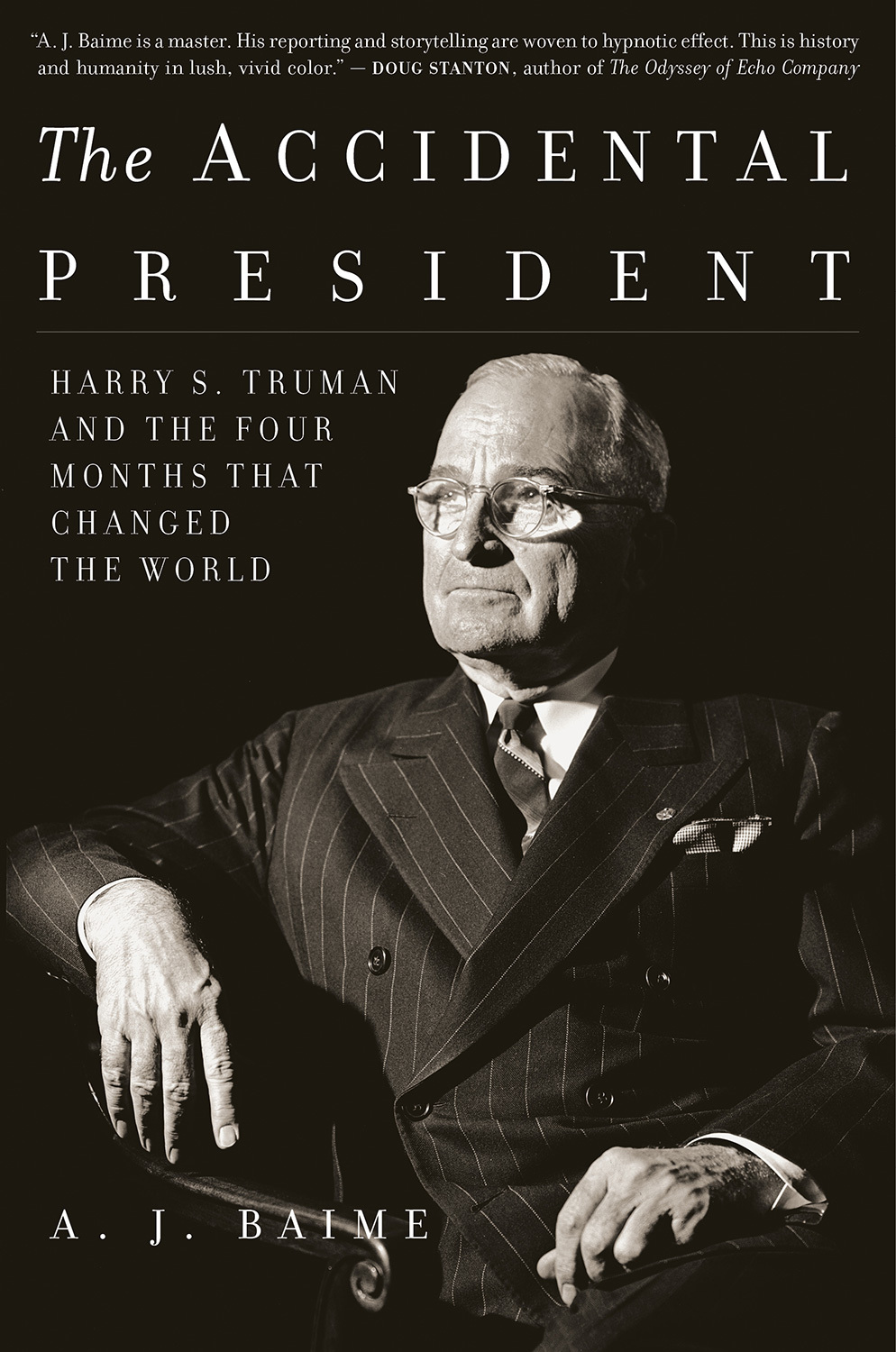
I very rarely read biographies, but A.J. Baime’s The Accidental President is top-notch narrative history, and a deeply endearing biographical snapshot. I had heard great buzz about this book and figured it would be a good election season read, especially given that the 2024 election marks the first time in my lifetime that a sitting vice president has had to rise to the occasions and take the reins on short notice. That said, Kamala Harris’s four-month sprint as the 2024 Democratic nominee will not come anywhere near as close to rivaling the immense responsibility and gravely consequential decisions Harry Truman had to make in his first four months as president. From Franklin Roosevelt’s death in April 1945 to the Japanese surrender that August, Truman had to juggle bringing the war in Europe to a close; facilitating the creation and ratification of the United Nations Charter; chairing and negotiating alongside Churchill and Stalin at the Potsdam Conference; deciding whether to use atomic weapons against Japan; and determining America’s role in building a post-war Europe and global order. As Baime explains, these are some of the most consequential decisions any world leader has ever had to make. The fact that they were made by an “ordinary” man from Missouri who had been vice president (reluctantly) for fewer than four months, had almost no insider knowledge or foreign policy experience, and had no desire to assume the presidency at all makes these decisions even more fascinating.
This book is not a complete biography of Harry Truman, but the chapters Baime devotes to describing Truman’s childhood and family life, his unlikely rise in Missouri politics despite his introverted disposition and multiple failed enterprises, and his pre-White House lifestyle as a senator and vice president does a lot to endear readers to Truman and give context to the style and substance of his decisions as president. While Truman himself was not the most dynamic human being, he was a perfect “every man” and he surrounded himself with remarkable figures. His family, particularly the women (especially his mother, his wife, and his daughter) each clearly influenced him strongly, and it’s pretty refreshing to read about a world leader who was a genuine “momma’s boy,” “wife guy,” and “girl dad” when we’re so used to hearing about powerful men being users and abusers. While Truman and Roosevelt barely had any relationship to speak of, he certainly held his own with the Washington big wigs and far more established world leaders.
Baime’s writing also really elevates this book. The pacing is excellent and the seamless use of primary sources including Truman’s letters and diary entries, eye-witness quotes, and historical documents really brought this world to life. As a Washington, DC resident I greatly enjoyed the level of detail Baime devoted to naming parts of the city where key events happened rather than just focusing entirely on what happened inside the Capitol and the White House. Maybe the only historical figure who comes out of this book looking pretty bad is poor Bess Truman. I can’t vouch for its accuracy, but Baime portrays the first lady as being so reluctant to assume the role that she comes across as appalled, scornful, and resentful of the position her husband has assumed and everyone associated with it (including him!).
I strongly recommend this book to readers looking for a manageable dose of presidential history, biography, World War II and early Cold War history, or U.S. foreign policy and international relations.
 The Once and Future Lit