
Spoiler Warning.
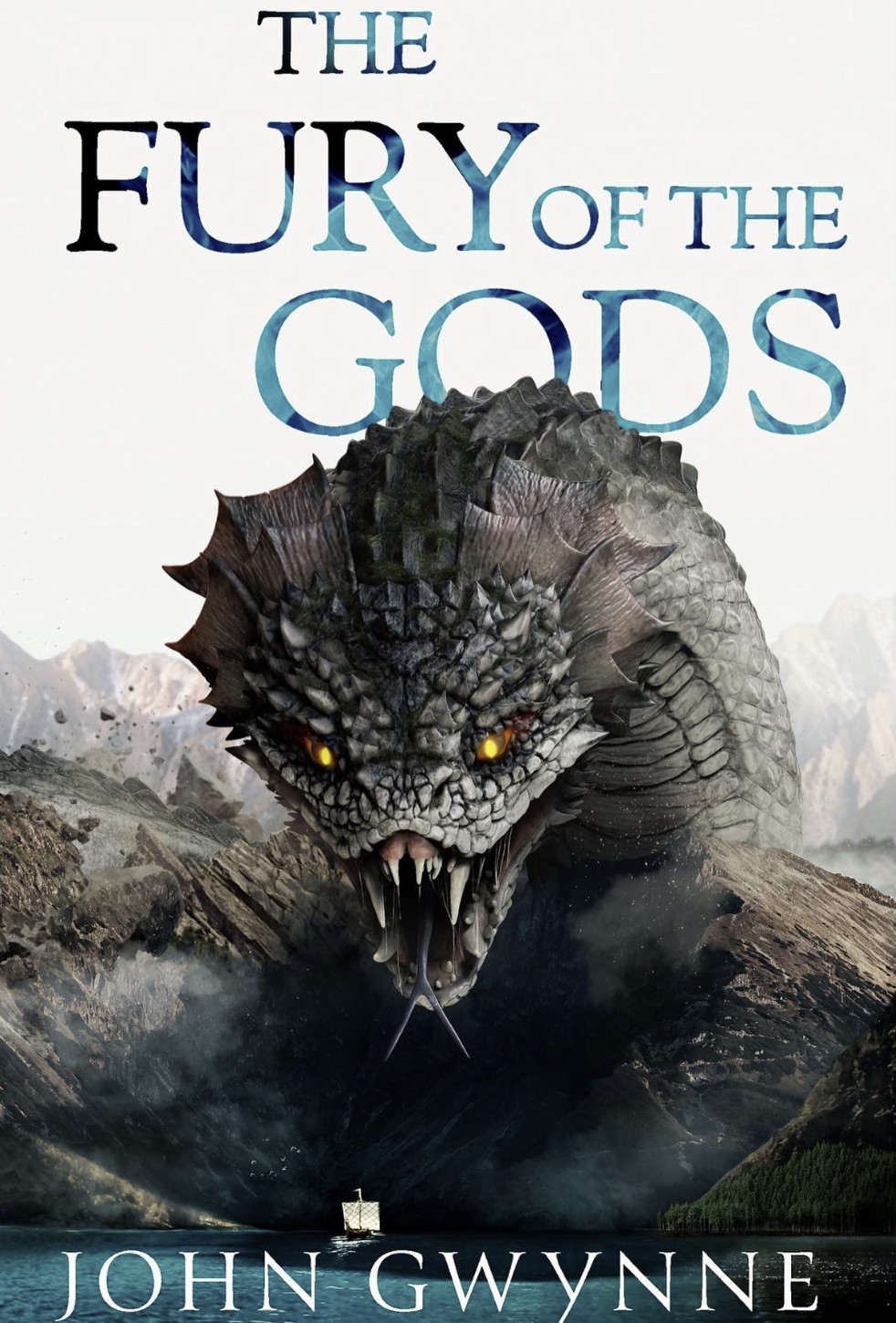
The Fury of the Gods is easily the best book in the Bloodsworn trilogy, and I could have seen myself bumping it up to five stars if there had been a few changes and refinements. Whereas The Shadow of the Gods was heavy on set-up and exploration, and The Hunger of the Gods was full of adventure, The Fury of the Gods is an exhilarating whirlwind of warfare. The final battle in this book is a drawn-out set piece that is highly cinematic, bombastic, sad, funny, and cathartic. While this could easily have been a story about giant gods smashing into each other like action figures, John Gwynne does an excellent job scaling back at all the right moments and keeping the emphasis on the human characters. With the exception of Varg (whose point-of-view continued to be the weak link), the main characters all get incredibly satisfying character arcs and fitting endings. Gudvarr’s comeuppance was incredibly satisfying, Biorr had a worthy redemption without receiving undue absolution, Orka got her vengeance and her happy ending with Breca, and Elvar became the awesome leader that the land of Vigrid deserved, even if it cost her everything.
Once again, John Gwynne’s prose was incredibly well-paced and readable, and I tore through this book in a matter of days. In this final installment, all the best parts of this world are on full display, from the gods, to the mythical creatures, to the battles, to the emotional character arcs. Other than the main characters, I particularly appreciated Ulfir and Lik-Rifa, and Hrung, the hilarious talking giant head who plays a wonderful role that fits so well with all the other fables the characters tell each other throughout the trilogy. While I enjoyed so much of what was here, the entire Iskidan storyline (which carried over from Varg and the Bloodsworn’s quest to rescue Vol the Seidr witch in the previous book) felt pretty pointless and unrelated to the rest of the main storyline. It almost felt like Gwynne wanted to let readers know that the world is bigger than the continent of Vigrid, and that there are peoples, kingdoms, and gods far beyond his Norse-inspired continent. But it didn’t amount to very much. Instead, I would have appreciated more time with the gods of Vigrid. Snaka’s revival was jaw-droppingly exciting, but ultimately short-lived. More of a tease than true fulfillment. And we never got to see many of the other gods from whom the tainted are descended.
Considering how ambivalent I felt about The Shadow of the Gods, I am very satisfied with how the rest of the trilogy played out, and The Fury of the Gods was an almost perfect conclusion to what its predecessors set up.
———-
My overall review of the Bloodsworn Trilogy as a whole is as follows:
Characters: 7.5/10. Once I got used to the stacked characters roster and figured out who truly mattered, it became a lot easier to relate to these characters. While Orka’s story was the highlight of the first book, Elvar is the true star of the sequels. Special mention to Lik-Rifa, Ulfir, Hrung, Gudvarr, Skald, Uspa, Spert, and Vesli.
Setting: 8/10. Vigrid is a fantastic fantasy world, and John Gwynne did a great job bringing a Norse-inspired world to life. The only problem I had was figuring out scale. It is not clear how long it takes to travel between locations, and how large certain places are. For example, is Snaka really the size of an entire continent-spanning mountain range?
World-building and Mythology: 9/10. Absolutely loved it. This mythology is incredibly fresh and yet relatable to fans of Norse myths. The creatures, Gods, and magic system perfectly balance wonder and horror.
Prose: 7/10. While Gwynne’s prose is serviceable, it can be a bit unexciting and repetitive at times. He is certainly very talented at writing action, but after a while, the fights start to sound the same.
Plot: 7.5/10. The story of the Bloodsworn Trilogy is not complicated or groundbreaking. This is, at the end of the day, a pretty straightforward fantasy adventure novel where characters are motivated by universal themes: love, power, revenge, fear, etc. While there is a clear evil presence to fight against, many of the characters are morally gray, which is compelling in this type of story.
Overall: 7.8/10.
 The Once and Future Lit