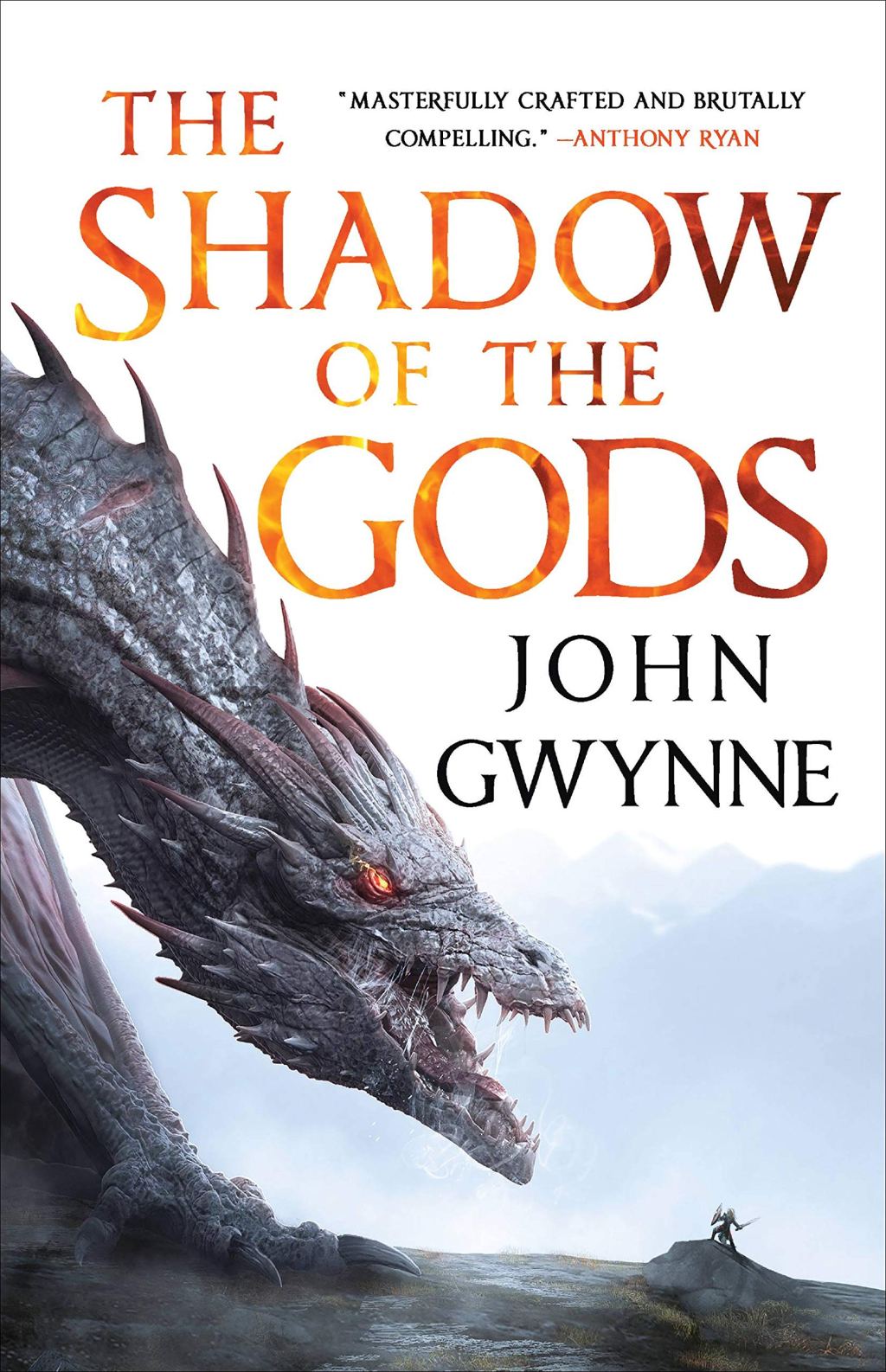
The Shadow of the Gods is aggressively (emphasis on aggressive) fine. This five-hundred-page novel is full of adventure tropes, fantastical twists on Norse mythology and viking culture, a laundry list of characters, and an abundance of action scenes. And yet, it does not really feel like much happens. While the action scenes are fast-paced, there are only so many bloody beheadings and impalings one can read for entertainment when the plot and characters development are lagging behind.
The concept here is very cool, especially for viking fans, but John Gwynne’s prose made it really hard to stay truly immersed in wild world of Vigrid. I don’t know why, but I found his descriptions of creatures and locations a bit difficult to visualize, and there are so, so, so many characters who are mostly insignificant or one-dimensional that I could barely remember them for most of the book. I wouldn’t be surprised if there are over a dozen characters whose names begin with “S’ and another dozen whose names begin with “V” in this book. Sigrun, Svik, Spert, Skrid, Varg, Vol, Vesli, Vörg, etc. I was a bit surprised to experience problems like these given that this is by no means John Gwynne’s first fantasy epic, and I expect more refinement from a veteran author.
That said, the mythology and world-building in The Shadow of the Gods is great. The gods’ descendants being “Tainted” humans who have the blood of the ancients running through them, giving them crazed abilities and likenesses to bears, wolves, dragons, snakes, rats, and other animals was very faithful to Berserkir lore. I am hopeful that there will be more on this front in the sequels.
The Shadow of the Gods follows three main point of view characters: Orka, Varg, and Elvar. Given that the three never interact or cross paths in this novel (with a very minor exception), it is worth commenting on each storyline separately:
Orka is by far the strongest of the three characters and her story is the only one with a compelling motivation behind it. Like the other two stories, hers starts out a bit slow. Most of the chapters covering her life with her husband and son on their homestead could easily have been woven into more condensed flashbacks. But once Orka is on the move, she is mostly great. She is the epitome of a skilled viking mercenary, and her hunt for Drakr includes some of the best brawls, stealth scenes, and escapes this book has to offer. If Orka has a down-side as a character, it’s that she risks being a bit too perfect.
Elvar’s story is the most inconsistent of the three. The daughter of a chief, Elvar is a rebellious woman who has decided to break with her family and the expectation that she will be content being married off for political gain. Instead she decides to team up with a band of mercenaries for hire. It probably sounds familiar and for good reason. Many of Elvar’s scenes are action-packed and full of the most interesting locations and creatures in the novel (a city built inside the skull of a giant dead snake is pretty awesome), and her character comes the closest to experiencing a climactic ending to this novel, but despite all that I never felt excited to read her chapters.
Varg is the final of the three characters, and by far the least interesting. He wants to avenge his dead sister and gets roped into a band of mercenaries, who he just follows around. Every twist or revelation in Varg’s story is pretty unremarkable, though.
For all its flaws and excesses, there’s a good Norse fantasy epic in these heavily padded pages. The Shadow of the Gods borders on falling into the category of somewhat bland but still enjoyable junk food reading, but there was enough in here to keep me interested in what happens next in the Bloodsworn Saga. This very much feels like a book that is 95% set-up, and I really hope the payoff is worth it in the sequels.
The Shadow of the Gods, John Gwynne
 The Once and Future Lit