
Let us begin with two excerpts from the forty-page-long author’s postscript (yes, you read that correctly):
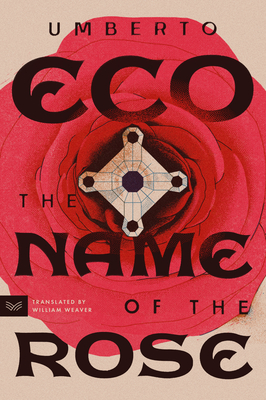
(1) Umberto Eco on the novel’s title: “My novel had another, working, title, which was The Abbey of the Crime. I rejected it because it concentrates the reader’s attention entirely on the mystery story and might wrongly lure and mislead purchasers looking for an action-packed yarn… The idea of calling my book The Name of the Rose came to me virtually by chance, and I liked it because the rose is a symbolic figure so rich in meanings that by now it hardly has any meanings left.”
(2) Umberto Eco on the pacing: “After reading the manuscript, my friends and editors suggested I abbreviate the first hundred pages, which they found very difficult and demanding. Without thinking twice, I refused, because, as I insisted, if somebody wanted to enter the abbey and live there for seven days, he had to accept the abbey’s own pace. If he could not, he would never manage to read the whole book. Therefore, those first hundred pages are like a penance of an initiation, and if someone does not like them, so much the worse for him. He can stay at the foot of the hill.”
In my opinion, those two admissions should be plastered on every edition of The Name of the Rose. I had been meaning to read this novel for years, and had incredibly high expectations that it would rocket toward the top of my list of favorite novels. I thought myself the target audience for a historical fiction murder mystery set in a medieval monastery, and fans of other works I adore (such as Hilary Mantel’s Wolf Hall and Ken Follett’s The Pillars of the Earth) seem to rave about this book. And yes, I appreciated The Name of The Rose, but it was painfully difficult to get through at times. This book is undeniably impressive and “good” in the sense that it is well-written, meticulously researched, and unbelievably ambitious, but at the same time, there were significant portions of it that I just did not enjoy. In many ways, Umberto Eco is the anti-Dan Brown. Where Brown’s religiously-themed mysteries are gripping thrillers laden with factual inaccuracies, atrocious prose, and overall sloppiness, Eco’s writing is so committed to philosophical and metaphysical ideas, physical descriptions, and atmosphere, that it feels like trudging through a swamp just to get to the next page where something actually happens. Throughout the book, Eco commits entire chapters to theological debates such as whether or not Jesus ever laughed, or whether Jesus ever owned private property. I found the arguments interesting and would probably enjoy discussing them in a class at a divinity school, but they became absolutely overbearing scattered throughout this novel. Monks were showing up dead every morning, and yet, everyone just goes on endlessly debating the immaterial. Single paragraphs go on for multiple pages at a time, triggering unpleasant memories of my experience reading Jose Saramago.
To be clear, I don’t object to slow pacing on principle. I adore Tolkien’s descriptive writing in The Lord of the Rings, and Hilary Mantel’s Wolf Hall books are some of my favorite novels of all time. The difference between Eco and those authors, though, is that there isn’t much that is particularly beautiful or inspiring about his prose. In reading both Tolkien and Mantel’s works, I find myself deeply moved by the characters and the prose, highlighting quotes, and bookmarking passages. To my great disappointment, I never felt any of that with Eco’s prose. Maybe something is lost in translation from the original Italian.
Admittedly, the pace does improve a bit as the novel progresses, and after crawling through the text for about three weeks I raced through the final two-hundred pages in a weekend. The entertainment to boredom ratio definitely improved, but I also think I also finally willed myself to care less about the squabbles and minutiae. The mystery gradually begins to return to the forefront of the narrative, but there were very few moments where I found it particularly gripping. In fact, the main character, William Baskerville’s theory of the killer’s motive and methodology turns out to be more exciting than what’s actually unfolding.
Overall, I’ll admit that The Name of the Rose is a good book and it was worth reading. The abbey and some of the monks are vividly described and there are few books that offer such a rich depiction of this particular setting. But I really cannot think of a single person I would recommend this book to. I am pretty sure I appreciate medieval history, Catholic theology, and historical fiction more than most people, and this was not an easy read. I think the closing words of the novel are a great place to leave this review.
“It is cold in the scriptorium, my thumb aches. I leave this manuscript, I do not know for whom; I no longer know what it is about: stat rosa pristina nomine, nomina nuda tenemus.”
 The Once and Future Lit