
10/10.
“The most important words a man can say are, ‘I will do better.’ These aren’t the most important words anyone can say, but they are the ones I needed to say. I am a man, and this is my truth.
The ancient code of the Knights Radiant speaks of ‘journey before destination.’ Some may dismiss this as a simple platitude, but it’s far more profound. A journey will bring pain and failure. It’s not only the steps forward that we must accept but also the stumbles, the trials, and the knowledge that we will falter—that we will hurt those around us.
But if we stop, if we accept the person we are when we fall, then the journey ends. The failure becomes our destination.
To love the journey is to accept that no such end exists. Through painful experience, I’ve learned that the most important step a person can take is always the next one.
I’m certain some will feel threatened by this record. Some may feel liberated. Most will simply believe it shouldn’t exist. But I needed to write it anyway…
— Oathbringer, My Glory and My Shame
Written by the hand of Dalinar Kholin.”
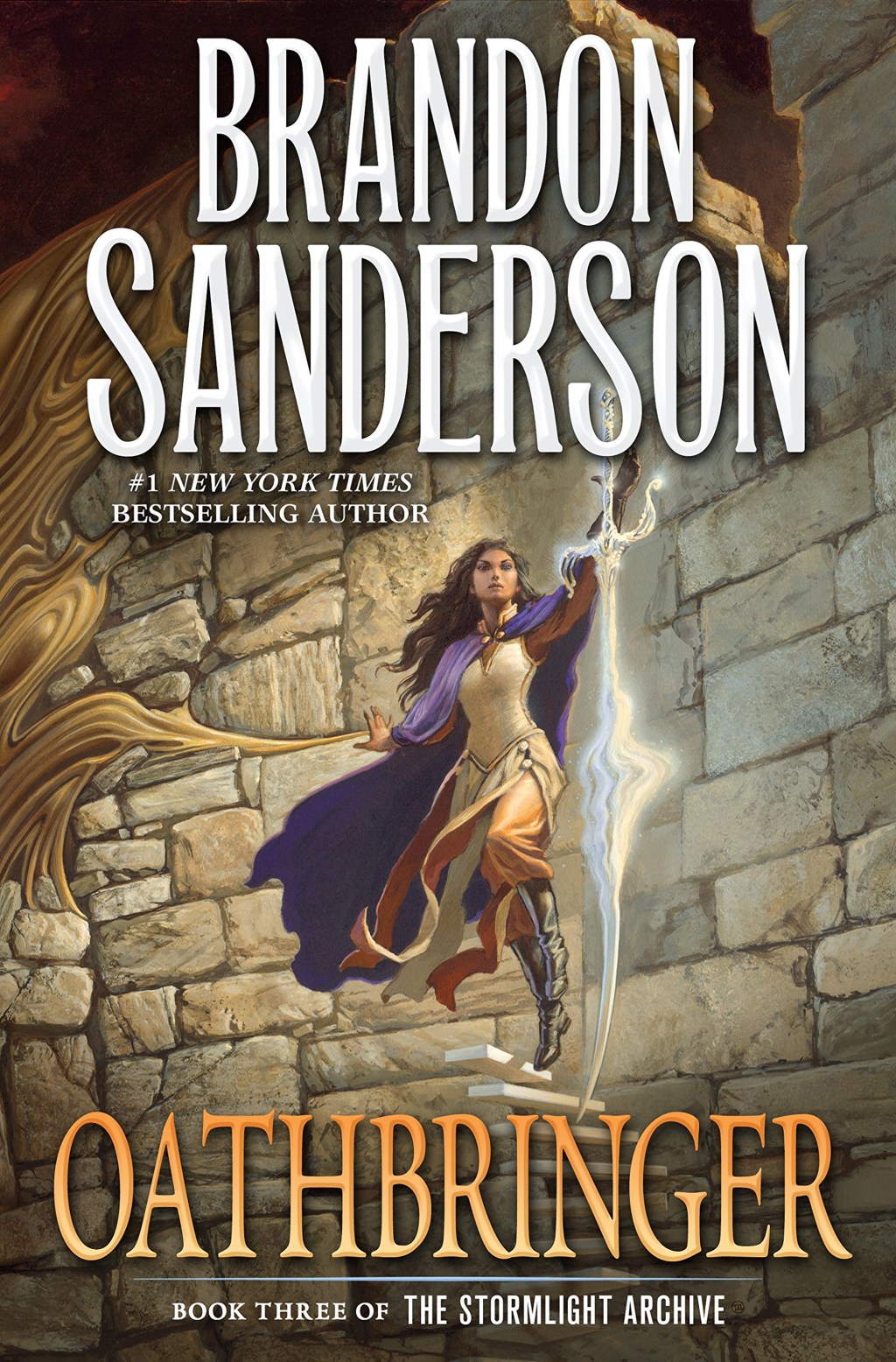
Oathbringer is an incredible book that is both a reward for Stormlight Archive fans who have journeyed three books into the series and a disappointment for those who will never read it because of the commitment required to reach this point. It’s the kind of novel that reminds me why I love fiction. It’s rare for an author to depict such compelling characters, create an intricate world rich with imagery and mythology, and deliver a positive, inspiring message about what it means to be human. Brandon Sanderson does all of this and more in Oathbringer.
While The Way of Kings and Words of Radiance were excellent, they were more contained, laying the groundwork for what was to come. Oathbringer expands the world of Roshar exponentially. With the introduction of Oathgates, characters can travel more easily, exposing readers to new cultures, cities, and environments. The world-building takes a huge leap forward, offering more depth in exploring Shadesmar, spren, and the complex history of Roshar. We learn about the relationship between Odium, Honor, and Cultivation, the Heralds, the Unmade, and the true origins of the Voidbringers. Some of these revelations were truly jaw-dropping.
As expected, Sanderson delivers a riveting climax in Oathbringer, earning the “Sanderlanche” moniker. During the final battle against Odium and his forces, I found myself nodding, smiling, and even chanting “Szeth! Szeth! Szeth!” aloud. While Sanderson sometimes receives criticism for his straightforward prose, it takes immense talent to craft such gripping, cinematic action consistently.
All the characters level up in Oathbringer, but one stands above them all. Dalinar Kholin is now one of my favorite characters in all of fiction, and his journey in this novel is a masterclass in character development. The flashbacks, which trace his evolution from the warmongering Blackthorn to the wise elder statesman, are deeply moving. We finally learn why he cannot remember his wife and what happened to her, and the answers are heartbreaking. In fact, the entire 1200+ pages of this novel could have been written about Dalinar alone, and I would have had no complaints.
In the end, Oathbringer is extraordinary. It’s a fantasy novel that’s not just about magic, creatures, and battles. It’s about people—about relationships, overcoming fears, and confronting the insecurities that hold us back. Dalinar’s reflections at the end of the novel and Shallan’s conversation with Wit in “The Girl Who Stood Up” (Chapter 82) will stay with me just as much as the clash of Shardblades and the uniting of realms and Radiants.
 The Once and Future Lit