
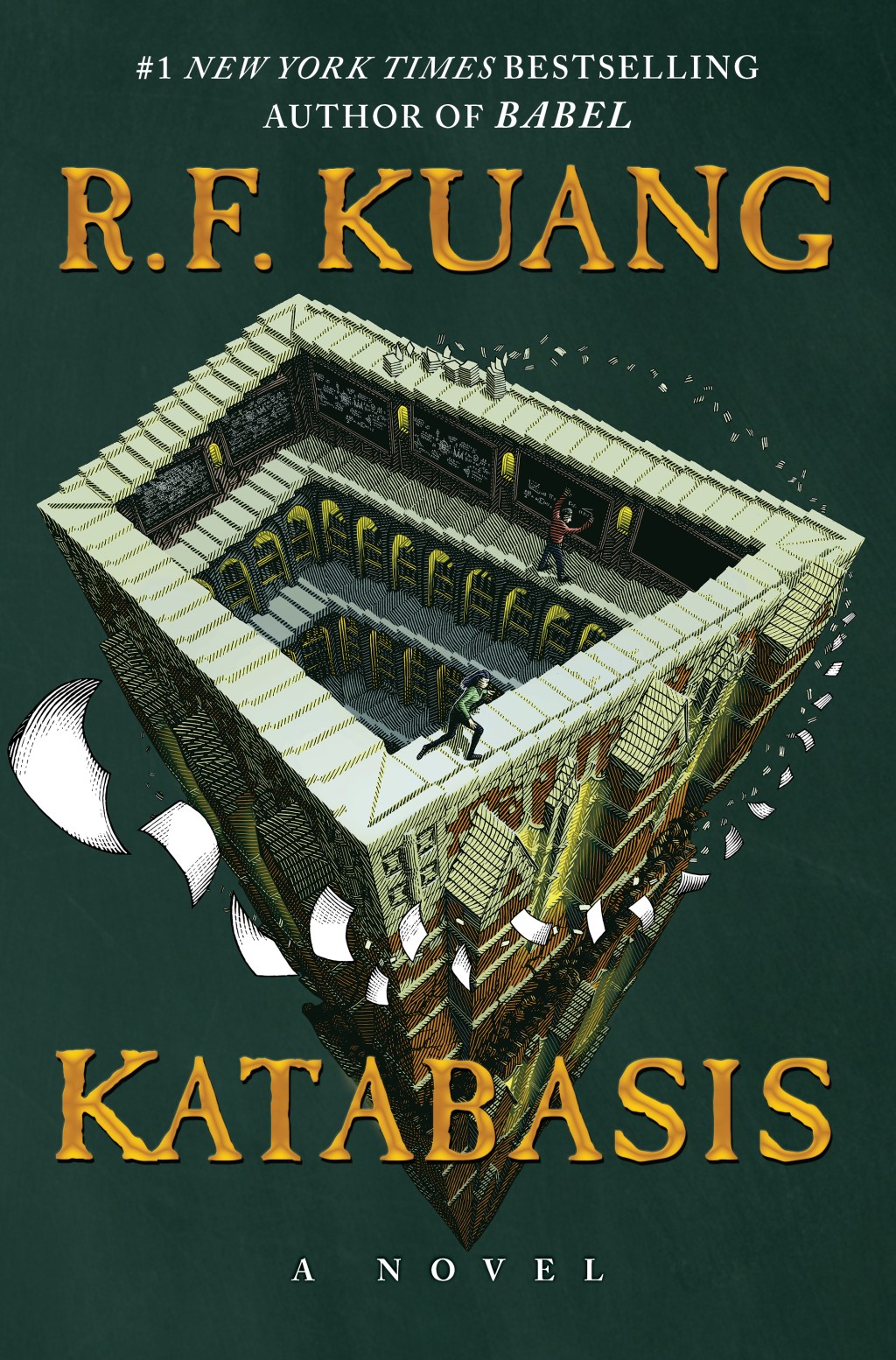
What a disappointment. This book dares proclaim itself a peer of Dante’s Divine Comedy and Susanna Clarke’s Piranesi. This is ridiculous. Katabasis is a boring, derivative, and cold novel that offers neither humor nor horror. Across this five-hundred-page journey through hell (pun intended), R.F. Kuang would like us all to know that she reads, knows a lot of things that sound smart, has been to grad school, and is very up-to date on popular trends in the book community (retelling classics, author self-insert protagonist, enemies-to-lovers trope, new-age spirituality).
Kuang’s vastly superior novel, Babel, helped spark the “dark academia” trend in publishing, but this book just vomits the tropes up with little subtlety. Yes, being well-read helps a writer find success, but it’s not everything. Everything in this book is so clinical and safe, except for the odd ill-fitting swear word or dirty joke. She’s even managed to take the fun out of magic itself.
Kuang spends so much time just summarizing philosophy, mathematical proofs, mythology, and other people’s work, that she forgets to tell a memorable story with interesting characters. The book literally ends with one main character admitting that she knows nothing about the other, and as readers we’re not much better off. We’re left knowing that Alice is a young woman in academia trying to prove that she’s as good as the boys, and the secret to Peter’s mystique is that he has problems with his digestive system. Riveting character work.
The best artists have something to say, not just because they read it in a textbook or heard it in a lecture, but because they actually have lived experience. At age 29, Kuang has stacked up multiple graduate degrees and published half-a-dozen novels, but maybe it’s time for her to slow down, get off the content treadmill, and get an education in life beyond the academy and the keyboard.
 The Once and Future Lit