
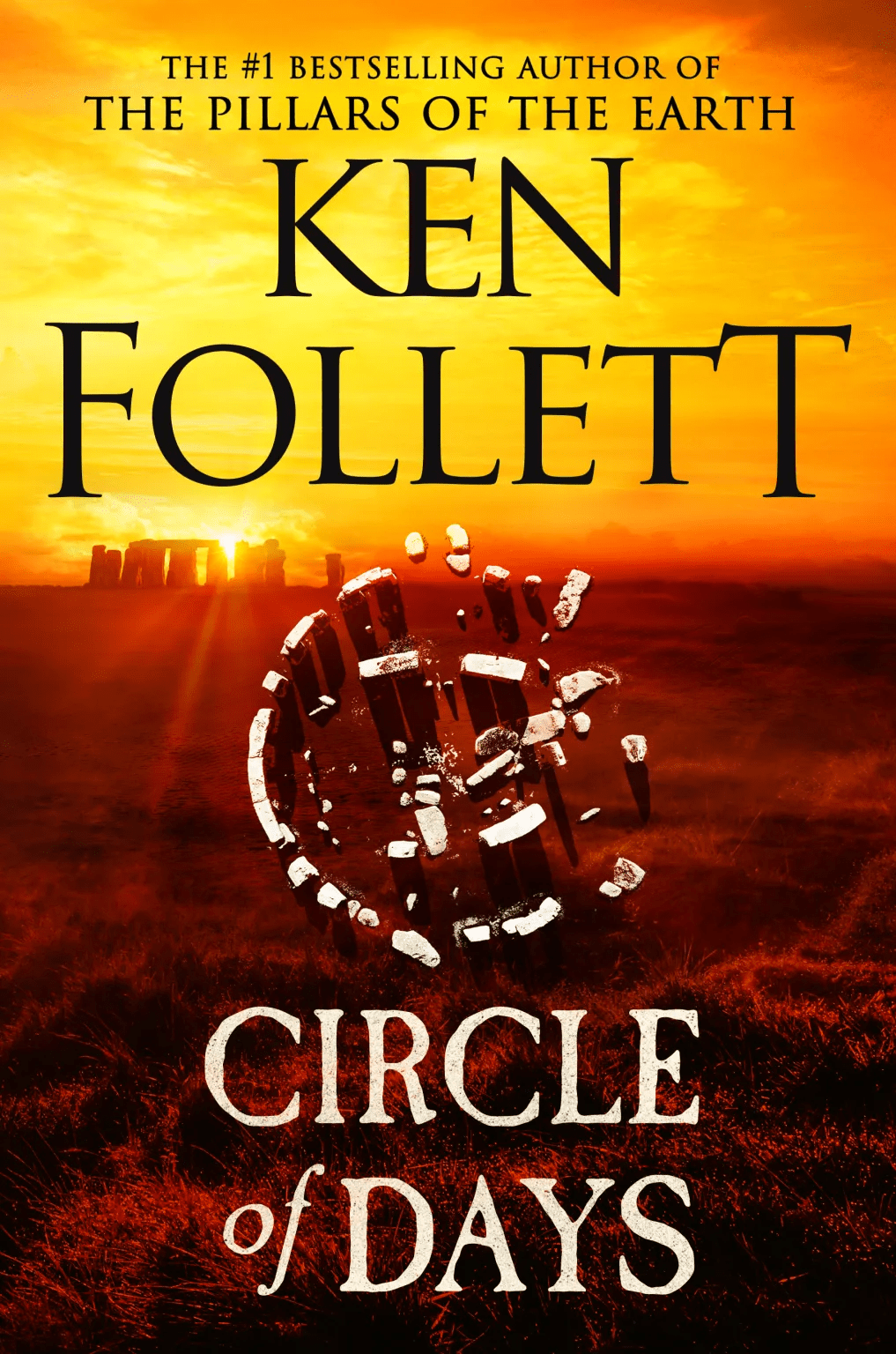
It seems to me that for decades now, Ken Follett has repeatedly sought to recreate the generational success of The Pillars of the Earth. To be fair, some of his subsequent Kingsbridge novels are very good, and I can appreciate the ambition behind The Century Trilogy, even if I did not care much for the execution. The problem with Circle of Days is that it is devoid of both ambition and heart.
The book’s spine is just as thick as ever, but masked behind wide margins, large font, and generous spacing, this book is thin in almost every other way. Circle of Days markets itself more or less as The Pillars of the Earth, but this time with a cast of characters contributing to the construction of Stonehenge. At face value, it delivers on that promise, but compared to Follett’s earlier efforts, it feels like reheated leftovers. If you compare this book’s builder character, Seft, to characters like Tom and Jack in The Pillars of the Earth, the difference in quality is not even close. The same goes for Joia, Neen, and Troon. Pia is probably the best of the bunch.
The writing in Circle of Days is also quite poor. The prose is simplistic and overexplained to such an extent that it reads like a book written for children (which, thanks to Follett’s fetishistic approach to writing about sex, it very much is not). Whereas Follett’s earlier historical novels excelled at creating tension in character relationships and were true page-turners that kept me emotionally invested in how conflicts and challenges would be resolved, there is almost none of that here. There are many examples of a problem emerging and being resolved within the same chapter, sometimes even on the same page. If you are interested in whether characters will fall in love, survive a dangerous situation, or get justice, you will never have to wait long.
With all this criticism in mind, I still did not actively dislike Circle of Days. While I sharply criticized The Century Trilogy for its cavalier treatment of gravely serious historical events, this book is much more innocent. I have always preferred Follett’s historical writing when his excesses are confined to the premodern world. I cannot say Circle of Days comes anywhere close to the Kingsbridge books as a vehicle for historical education, but to be fair, Follett had much less to work with when focusing on Stonehenge. The sandbox is still fun to play in, though, and there were a few scenes focused on Pia and her family that were genuinely great.
If you are a long-time fan of Follett’s historical novels and are willing to lower your expectations, there is no harm in reading Circle of Days. But if you skip this one, I cannot say you are missing much. At this point, I really wish Follett would either retire or take his time and put his full effort into publishing one last masterpiece, instead of repackaging The Pillars of the Earth every few years. Until now, I have been guilty of indulging this bad habit, but I may call it quits here.
 The Once and Future Lit