
“You said I killed you—haunt me, then! Be with me always—take any form—drive me mad! Only do not leave me in this abyss, where I cannot find you!”
9.5/10.
Wuthering Heights showed me just how foolish it is to hold a grudge against a classic work of literature that I was forced to first encounter in the wrong place (high school) at the wrong time (at age 16). Besides vague resentment rooted in adolescent misgivings, it was a blessing in disguise that I otherwise retained no memory of this book (other than the vague notion that Heathcliff is a brooding Byronic hero and that Wuthering Heights is a house) before picking it up this past week. Because within these pages, Emily Brontë delivered one of the most unimpeachable novels I have read. Much to my surprise, Wuthering Heights now sits beside Great Expectations, Dracula, The Master & Margarita, and The Lord of the Rings on my list of favorite classics.
As a fan of all things gothic, ghostly, dark, and moody, I supposed I shouldn’t be surprised by how much I enjoyed this novel. But craggy moors, dark houses, graveyards, and howling winds aside, there was so much to Wuthering Heights that genuinely surprised me. First and foremost, I did not appreciate just how much this is not a love story at all. This is a ghost story. A story about abuse and grief and revenge and uneasy relationships, not just between Catherine and Heathcliff, but between a tangled web of relations and neighbors across generations. I understand why so many fans and adaptations focus on the doomed romance; after all, the book’s greatest quotes stem from it, and Catherine is the nexus connecting so many of the characters. But to ignore the second half of the novel misses so much of Brontë’s insight into the ways sins, grudges, curses, traumas, and mistakes don’t just die with their source. To be at Wuthering Heights is to be locked into a vicious cycle of darkness and isolation, only escapable by those who refuse to be haunted by it.
As much as I did not enjoy encountering this book in school, it is inarguably among the best examples of fine literature and many enduring genres, tropes, and archetypes. The evocative settings. The heightened emotions and passions. The duality and mirroring of the various pairs in the novel (Catherine/Heathcliff, Heathcliff/Edgar, Wuthering Heights/Thrushcross Grange, Hareton/Linton, etc.). The narrative frame structure as told primarily by Nelly to Lockwood. Heathcliff as the tragic, deeply flawed Byronic hero (one part Dracula, one part Gatsby). In short, there is a reason so much has been written about Wuthering Heights and why it has endured, and I have no doubt that my single read-through has still only scratched the surface of the richness this novel contains.
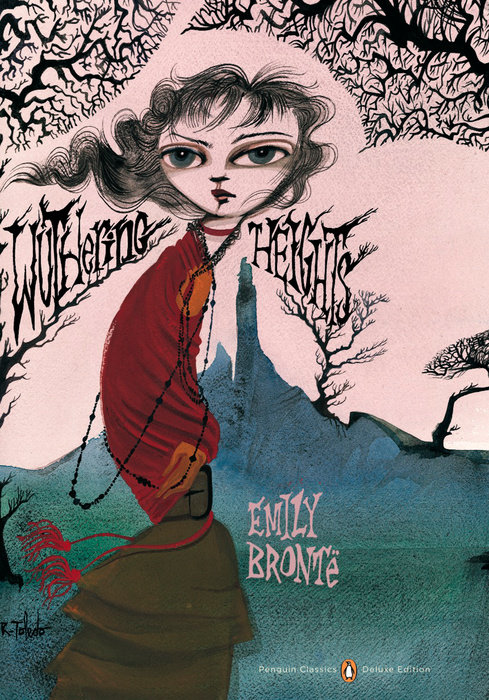
 The Once and Future Lit