
After reading (and really enjoying) the first arc of The Stormlight Archive last year, I was eager to return to the Cosmere universe but did not yet feel ready to commit to the Mistborn series. Enter Tress of the Emerald Sea.
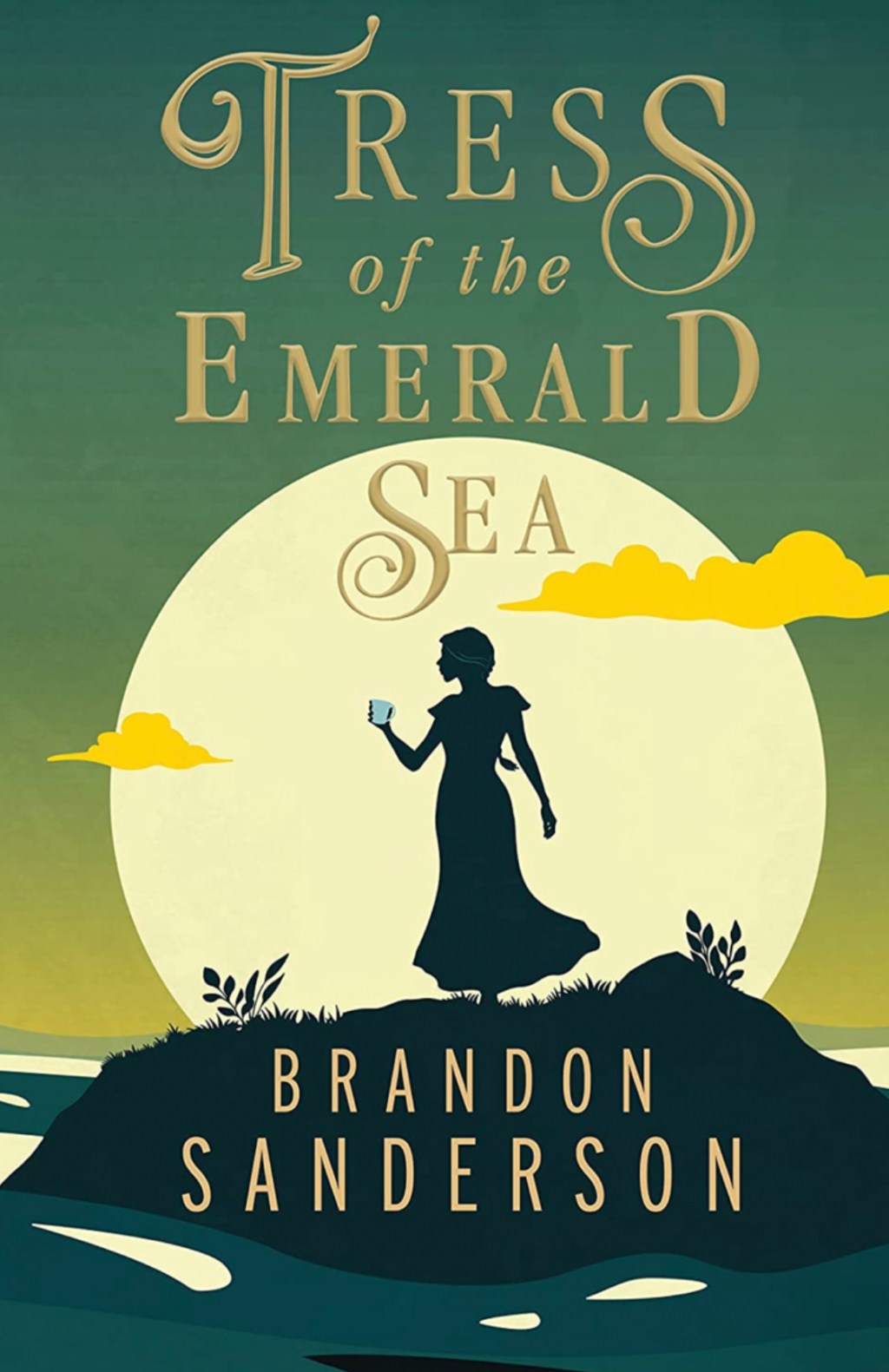
Tress of the Emerald Sea is a pleasant, relatively low-stakes standalone story set in Brandon Sanderson’s Cosmere. Unlike Sanderson’s signature epic thousand-page tomes, this story has far fewer characters and, according to Sanderson himself, reads more like an extended version of the fables in the Stormlight books. Like many of those fables, Tress of the Emerald Sea is narrated by Hoid—the mysterious planet-hopping immortal being featured in many Cosmere books. More on that later in this review.
While it is a much less imposing entry than many of its Cosmere siblings, Tress of the Emerald Sea is no less ambitious in showcasing Sanderson’s remarkable ability to craft innovative and visually compelling fantasy worlds. The planet of Lumar is as interesting and well-realized as Roshar from The Stormlight Archive. This new planet is largely covered in oceans of spores that rain down from a dozen elemental moons. These spores rupture upon contact with water, unleashing wind and dangerous forces. The titular Emerald Sea is but one of these, spawning unruly vines and foliage trunks upon liquid contact. As we sail with Tress and her comrades across Lumar, Sanderson showcases the unique biomes of several other spore seas, each of which reacts differently. Lumar is such a conceptually beautiful world that I genuinely regret that I do not own the illustrated deluxe edition of this novel.
Beyond the draw of Lumar, Tress of the Emerald Sea is also made very enjoyable by its likeable characters and classic fantasy adventure plot. Sanderson set out to write a Cosmere fairy tale, and in that he largely succeeded. Nothing in the plot itself is particularly surprising or boundary-pushing, but I don’t think that would have made this particular book better. If you want a throwback fantasy story featuring pirates, a dragon, a sorceress, and an endearing talking animal companion, with Cosmere lore and aesthetics sprinkled on top, then Sanderson has you covered here. Tress herself is somewhat reminiscent of Shallan from The Stormlight Archive—a young woman who is very creative and finds her courage. Huck the talking rat is a classic animal sidekick, and I could see his character being particularly interesting on a close re-read. Of the likeable members of the Crow’s Song crew, Fort, the deaf sailor, and the zombie-like doctor Ulaam who stitches body parts together were by far the standouts. As for Captain Crow herself, her spore-related affliction further enriched the world of Lumar, and I got a good kick out of how fittingly her character arc wrapped up.
And yet, for all I enjoyed about this book, I cannot ignore its at-times irritating flaws. Could I have used a little less time hanging out on the pirate ship and more time with the dragon and the sorceress? Sure. But the pacing is a minor quibble. The one thing that really did not work for me here was Hoid’s narration. In The Stormlight Archive, Hoid is a witty and insightful presence who often helps characters in a tough spot or serves as a vessel for Sanderson to weigh in with musings on human nature, storytelling, and morality. Even in those books, the humor is uneven. But here, it’s borderline bad. The decision to have Hoid spend this entire book afflicted with a curse of stupidity and bad taste was, in my opinion, a real swing and a miss. I’ve forgiven Sanderson for some clunky lines and corny jokes in the past, but this was a step too far. I don’t believe writing needs to veer into immature territory just because the story being told is meant to be more whimsical and light. Certainly not in a world where Terry Pratchett’s Discworld exists.
Overall, Tress of the Emerald Sea is a fun fantasy adventure, reminiscent of several classics. If you have never read any of Sanderson’s Cosmere novels, I think this is a good sampler of his beautiful worlds, innovative blend of high fantasy and science fiction, positive and uplifting storytelling, and even his occasional duds in the prose and humor departments. There are a few Cosmere lore tidbits and characters who show up or are referenced, but understanding them all is by no means required. I picked up on a few from The Stormlight Archive, but I could tell that there were several others that referenced books I have not read, and that did not detract at all from my reading experience. It may not be a masterpiece, but I had a good time sailing the seas of Lumar with Tress, and I would love if Sanderson revisited this world in the future.
 The Once and Future Lit