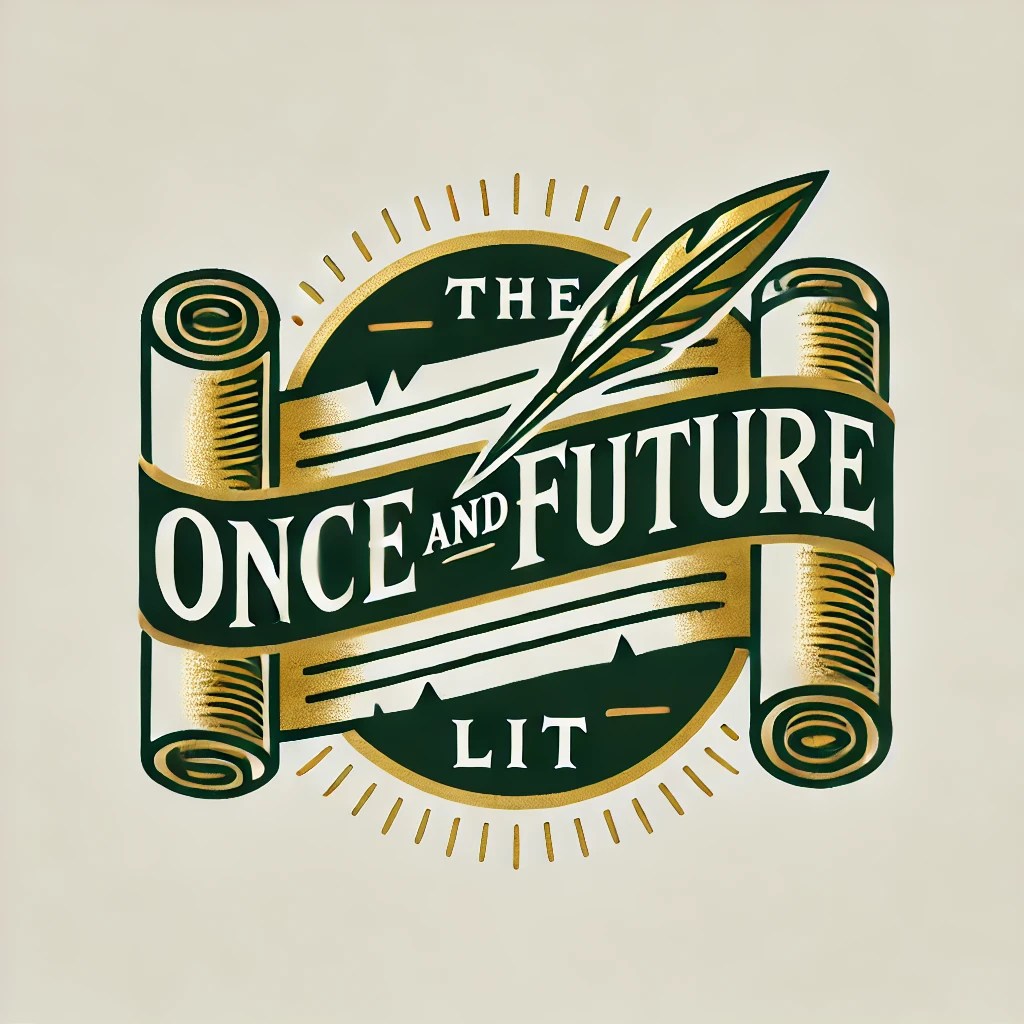
Bettany Hughes’ self-described “extraordinary new journey through history’s greatest wonders” certainly has its moments where it is an engrossing, fascinating, and very informative read. And yet, as a whole, the wonderful research and storytelling contained in these pages is all-too-often derailed by asides and commentary that really did not need to be included. I cannot remember the source, but a few years ago, I heard that in modern non-fiction publishing, the presence of the word “new” in a book’s title or subtitle is generally a giveaway that it is a revisionist work of history. More often than not, this means the author applies a left-leaning ideological filter onto their work. I usually have no problem with this when the author is transparent about their particular agenda or argument up front. In fact, I quite enjoy encountering well-argued perspectives I disagree with or am unfamiliar with. For example, Peter Frankopan’s The Silk Roads: A New History is very transparent that its thesis is to chronicle world history with an emphasis on The Middle East and Central Asia as a crossroads between the traditionally understood West and East.
What I do not enjoy, however, is when historians (on either side of contemporary culture wars and identity politics) subversively revise established historical narratives and inject their twenty-first century politics and analytical lenses onto the ancient past, especially the ancient world. I knew absolutely nothing about Bettany Hughes before reading this book, and yet, before searching her name even once, I was able to deduce that she is a feminist historian. Again, there is nothing wrong with that on its face, but when an author’s politics leap off the page so jarringly throughout their work, sometimes in ways that are purely speculative and unsourced, it makes me question their overall credibility. Here are just a few examples of what I’m referring to. Throughout the book, Hughes refers to Alexander the Great as a “megalomaniac.” On multiple occasions, Hughes makes a point of framing masculinity in the least flattering light. Take her description of the Statue of Zeus (who Hughes cringeworthily insists has “daddy issues”) at Olympia as a place “to immerse yourself in the monstrous possibilities of mankind, of the possibilities of (male) minds and (male) bodies.” Hughes is so star-struck by a girl boss that she flat-out suggests renaming the Mausoleum of Halicarnassus after his wife, Artemisia, who was later buried in the mausoleum alongside her husband. This, she insists, would “certainly” be a “glorious tribute to a feisty Karian queen.” Returning the Statue of Zeus, Hughes speculates that the ramps leading up to the temple’s interior may well have been disability ramps. Her evidence for this? Many Greeks suffered injuries from warfare and plagues. By Hughes’ reckoning, the construction of The Colossus of Rhodes, “sets in train a plundering of the earth’s resources which now threatens life on earth itself.” And The Pharos Lighthouse of Alexandria was “particularly mistrusted by the Romans, because […] it belonged to a woman […] Queen Cleopatra VII.” Hughes, unfortunately, bloats this book with many such speculative opinions presented as historical fact, and it is a shame, because I really enjoyed this book whenever she wasn’t wish-casting her politics onto the ancient world or taking cheap shots at tourists, everyday street vendors, and Christianity.
I do want to be fair to Hughes and her work, though. I really did enjoy this book, and I learned a lot from Hughes’ writing when it is actually well-sourced and factually-grounded in archeology, primary sources, and a sophisticated understanding of how the civilizations and cultures of the ancient Mediterranean interacted. Having read multiple histories of ancient Egypt, Hughes’ chapter on the construction of Khufu’s Great Pyramid at Giza was a masterclass, and her chapters on the Hanging Gardens of Babylon, the Temple of Artemis at Ephesus, and The Statue of Zeus at Olympia were particularly educational. I come away from reading this book feeling like I have a much clearer picture, not only of the Seven Wonders, but of the entire context in which they were built, and their legacies. This book was a great way to enrich my knowledge of Greek mythology and religion, as Hughes does a great job describing the relationships many relevant deities had to one another, and to mythical and historical figures ranging from the heroes of Homeric epics to Alexander the Great. Likewise, Hughes wonderfully reconstructs the ancient Mediterranean world in such a way that I could picture the landscapes, the topography, and the materials used to construct and adorn each wonder.
This review may come across as particularly harsh or negative, given its emphasis on what I did not enjoy about this book. Partially, that is because I felt the need to put in words (for my own future reference) what specifically it was about this Hughes’ work that irked me. But it is also because I think readers should know before reading that while this book does not market its politics, it is not even close to a neutral history. All that said, if you can tolerate that and accept it for what it is (opinion, not fact) then there is still a lot of value in this book, and you’ll get to the end wishing these lost wonders were still with us.
 The Once and Future Lit